Multi-Level Cat Tree: 2 Condos, Hammock & Scratch Posts
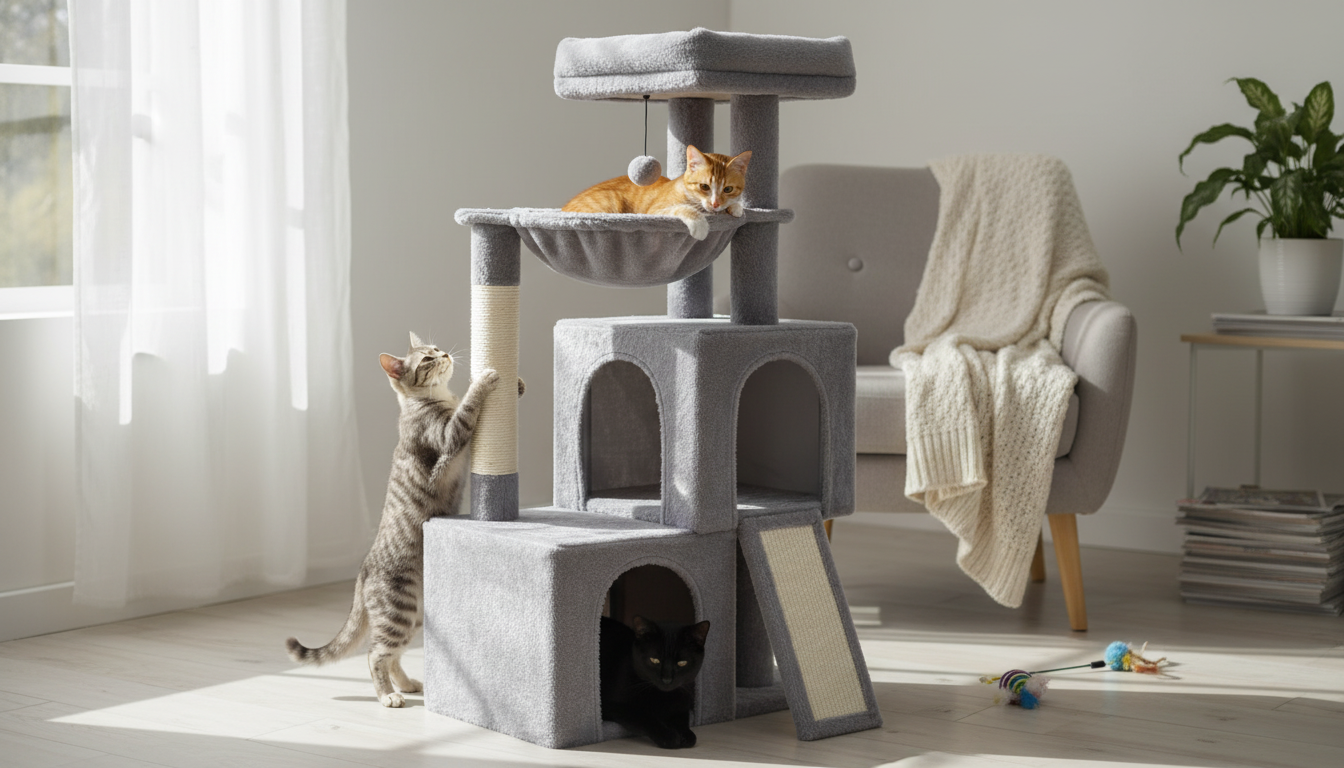
Large Multi-Level Cat Tree with Two Condos, Hammock, and Scratching Posts: A Practical Home Setup for Climbing, Resting, and Scratching
A well-designed cat tree can reduce boredom, protect furniture, and give cats a reliable place to climb, nap, and scratch. This multi-level design combines two roomy condos, a hammock for lounging, and multiple scratching posts to support everyday play and rest—especially helpful for multi-cat homes or energetic indoor cats.
What a multi-level setup adds to daily cat life
Cats are built for vertical living. Adding height and “routes” inside the home supports natural behaviors while giving them a predictable place to land—both physically and emotionally.
- Vertical space supports natural behaviors like climbing, perching, and surveying a room from a safe height.
- Multiple levels help cats share territory with less tension by offering separate zones for resting and play.
- A dedicated scratch-and-climb area channels energy away from curtains, sofas, and door frames.
- Choice reduces stress: open platforms for social time and enclosed condos for quiet retreat.
Height can be especially meaningful in busy homes, where an elevated perch becomes a “no-pressure” space to observe without being approached. Guidance on scratching needs and why cats do it is covered by the ASPCA’s overview of scratching behavior, while broader enrichment and comfort needs (including safe resting places) are discussed by International Cat Care.
Key features that matter: two spacious condos, hammock, and scratching posts
Some cat trees look impressive but don’t get used because they don’t match how cats actually rotate through a day: brief bursts of play, long naps, and quick scratch sessions. A practical multi-level tower builds those habits into the structure.
- Two enclosed condos: useful for privacy, stress relief, and nap time—particularly valuable when multiple cats want separate hideaways.
- Hammock lounge: a suspended resting spot that often becomes a favorite for cats who like cradled, secure naps.
- Scratching posts: encourage healthy claw maintenance and scent-marking in an appropriate place.
- Multi-level platforms: create routes for climbing and play, supporting exercise for indoor cats.
| Component | Typical use | Best for |
|---|---|---|
| Upper platforms | Perching, jumping, watching activity | Active cats, window watchers |
| Two condos | Hiding, uninterrupted sleep, decompression | Shy cats, multi-cat homes |
| Hammock | Cradled lounging, deeper naps | Cats who like soft, enclosed resting spots |
| Scratching posts | Claw care, stretching, scent-marking | All cats; especially heavy scratchers |
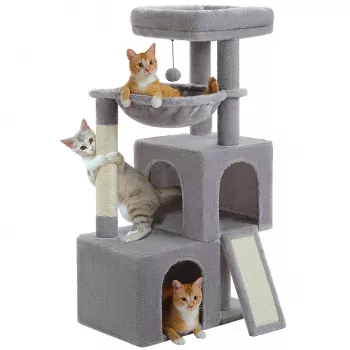
For a balanced everyday setup, consider the Large Multi-Level Cat Tree with 2 Spacious Condos, Hammock, and Scratching Posts, which is designed to combine private resting zones with climbing access and scratch-friendly surfaces in one footprint.
Choosing the right size and layout for one cat or multiple cats
“Bigger” isn’t always better—layout is what determines whether cats can pass each other comfortably and whether the tree feels easy to use. Think in terms of traffic flow: up, down, around, and away.
- Match the footprint to the room: ensure walkways and doors stay clear while still giving cats a stable climbing zone.
- Plan for shared use: two condos can reduce competition when cats want to retreat at the same time.
- Consider mobility: older or less agile cats often prefer shorter jumps between levels; placing the tree near a sofa can create an “easy step” route.
- Think ahead for kittens: avoid positioning high perches in a way that encourages risky leaps to shelves or railings.
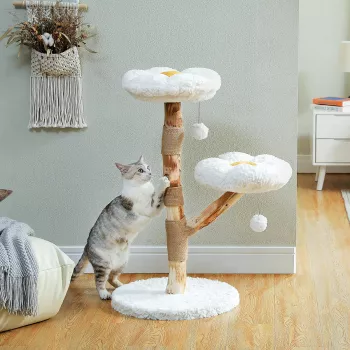
If your home already has a playful aesthetic or you want a softer silhouette, the Flower Cat Tree can be a strong option for cats that enjoy lounging spots with a more decorative look, while still providing vertical enrichment.
Stability and safety checks before daily use
A cat tree only becomes a “go-to” spot if it feels rock-solid. A slight wobble can turn a confident jumper into a hesitant climber.
- Place on a flat, non-slippery surface; carpets or textured rugs can improve grip and reduce shifting.
- Position near a wall or corner for extra support—especially helpful for energetic jumpers.
- Tighten hardware after assembly and re-check periodically; normal use can loosen fasteners over time.
- Keep the top perch away from risky launch points like fragile décor, TV edges, and narrow ledges.
Where to place it for maximum use
Placement can matter as much as the features. Cats use cat trees most when the location aligns with their daily routines: watching, social time, and quiet rest.
Helping cats switch from furniture to scratching posts
Assembly and upkeep that keeps it inviting
A good fit for different cat personalities
FAQ
How can two cats share one cat tree without fighting over it?
Look for separate zones that let cats spread out (two condos, a hammock, and multiple platforms), and place the tree in a neutral area where neither cat feels cornered. Adding a second scratcher nearby and rewarding calm turn-taking can also reduce competition.
How often should the scratching posts be replaced?
Replace or re-wrap posts when the surface becomes smooth, unstable, or frays into loose strands—often after a few months of regular use, depending on how aggressively your cat scratches. Check periodically for exposed staples or loosened wrapping so the post stays safe and appealing.
Where is the best place to put a cat tree for regular use?
Put it near a window or in a family area where your cat naturally likes to hang out, ideally against a wall or in a corner for stability. Avoid loud appliances and keep a safe buffer from breakables and risky launch points.














Leave a comment