Airless Spray Gun Hose Kit + Extension Rod: Setup & Fit
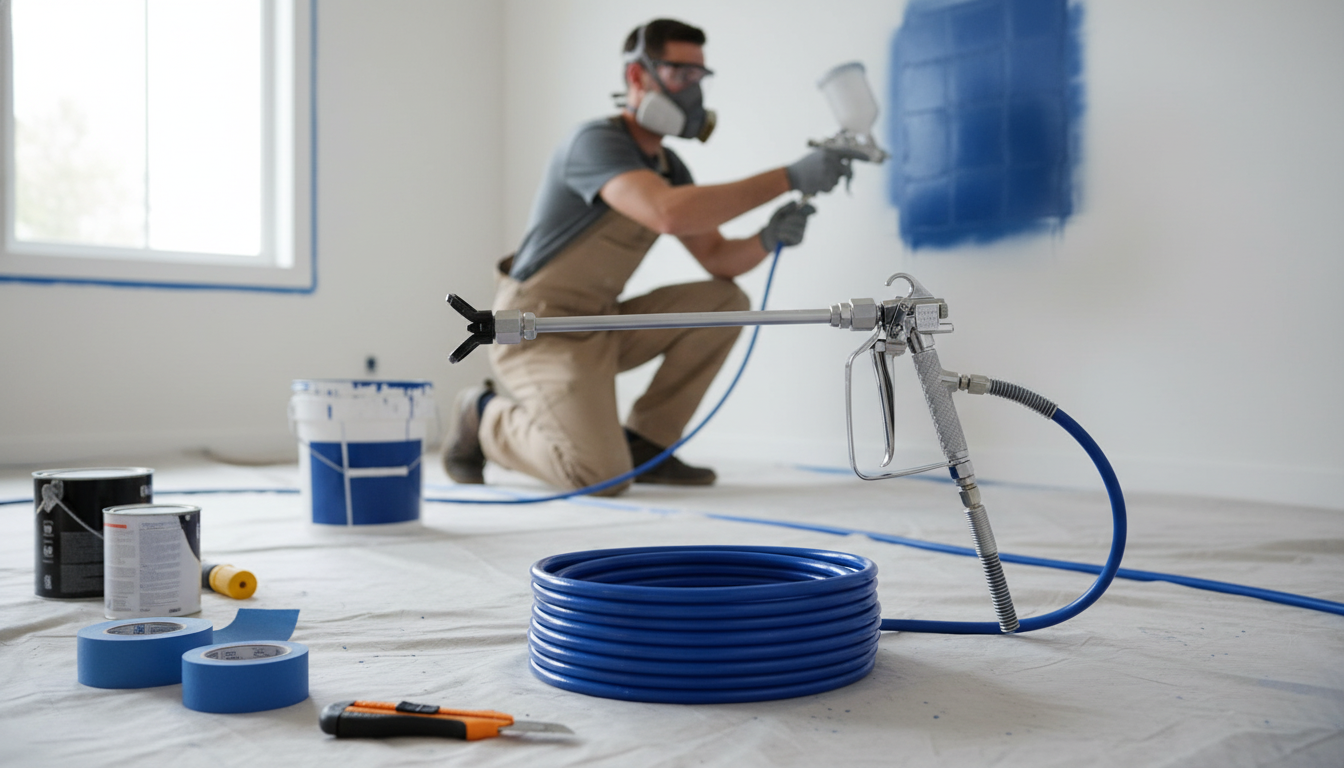
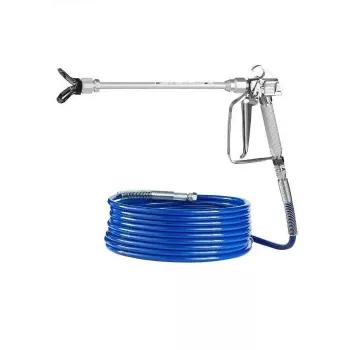
High Pressure Airless Paint Spray Gun & Hose Kit with Extension Rod
A hose-and-gun kit with an extension rod can make airless spraying faster, cleaner, and easier to control—especially when coating ceilings, soffits, fences, and other hard-to-reach surfaces. This guide breaks down what a high-pressure airless spray gun hose kit typically includes, where it shines, how to set it up safely, and what to check for compatibility before connecting it to an airless pump.
What This Kit Solves on Real Projects
- Extends reach for ceilings, eaves, stairwells, and tall walls without constant ladder repositioning.
- Reduces fatigue by keeping the gun at a more natural angle while the extension rod carries the distance.
- Improves consistency on broad surfaces by helping maintain a steady spray distance and overlap.
- Cuts time spent brushing/rolling edges in areas where access is the main obstacle.
If you regularly find yourself “making do” with a short gun setup—stretching to hit a ceiling line or leaning to reach behind rails—an extension rod changes the job from awkward to repeatable. That repeatability is where cleaner lines, fewer dry spots, and less overspray cleanup tend to come from.
What’s Typically Included (And What to Confirm Before Buying)
- Spray gun body designed for high-pressure airless output (not HVLP).
- High-pressure hose section with fittings intended for airless pump connections.
- Extension rod for overhead and high-wall work; length and threading can vary by kit.
- Trigger safety/guard and connection hardware (verify all seals and O-rings are included).
- Confirm the kit supports the pressure range of the airless sprayer being used and matches the fitting type on the pump and gun.
If you’re shopping specifically for an all-in-one setup, the High Pressure Airless Paint Spray Gun & Hose Kit with Extension Rod is designed to consolidate these essentials so you can focus on setup, technique, and cleanup rather than hunting down adapters.
Compatibility Checklist: Pump, Tips, and Fittings
- Pressure rating: the hose, gun, and extension should be rated at or above the pump’s maximum pressure.
- Thread/fitting type: confirm the hose ends match the pump outlet and the gun inlet (common airless standards exist, but not all kits are identical).
- Tip and guard compatibility: ensure the gun accepts the tip guard style used on the job (and that replacement tips are readily available).
- Material compatibility: confirm seals and wetted parts are suitable for the coating being sprayed (latex, acrylic, oil-based, stains, etc.).
- Hose length and diameter: longer hoses can reduce portability and may require technique adjustments to maintain consistent pressure at the gun.
Quick Fit Check Before Connecting to an Airless Sprayer
| Component | What to verify | Why it matters |
|---|---|---|
| Hose | Pressure rating and fitting type at both ends | Prevents leaks, blowouts, and connection mismatch |
| Spray gun | Tip guard style and trigger safety function | Ensures proper tip seating and safer handling |
| Extension rod | Threading/adapter compatibility and straightness | Avoids wobble, leaks, and uneven fan pattern |
| Seals/O-rings | Present, undamaged, and compatible with the coating | Reduces drips and premature wear |
| Pump | Max pressure and outlet connection standard | Keeps the system within safe working limits |
Setup Basics: From Unboxing to First Spray
- Inspect fittings, O-rings, and threads; replace any damaged seals before pressurizing.
- Attach hose to the pump and gun hand-tight, then snug with the correct wrench—avoid overtightening that can crush seals.
- Install the extension rod between the gun and guard only if the kit is designed for that configuration; confirm the flow path is correct.
- Prime and flush the system with the appropriate fluid (water for many latex paints; mineral spirits for many oil-based coatings—follow coating and sprayer guidance).
- Start with a lower pressure setting, test on cardboard, and increase pressure only until the fan is even and tails disappear.
A practical way to avoid early frustration is to treat the first spray as a “calibration pass.” A smooth fan pattern with minimal overspray typically comes from the lowest pressure that still atomizes evenly—cranking PSI higher than needed usually adds bounce-back and fog without improving coverage.
How to Spray Faster With an Extension Rod (Without Creating Runs)
Care, Storage, and Longevity
Safety Practices for High-Pressure Spraying
For additional guidance on worker protection and ventilation, review safety resources from OSHA and respiratory protection recommendations from NIOSH. Consumer coating safety considerations are also covered by the EPA.
Common Issues and Fast Fixes
More In-Stock Picks
- High Pressure Airless Paint Spray Gun & Hose Kit with Extension Rod
- Build a Smarter Content Calendar with AI | AI-Powered Content Planning Guide, Digital Download for Creators & Entrepreneurs, Content Strategy eBook
- Flower Cat Tree
FAQ
Will this work with any airless paint sprayer?
It depends on matching the pressure rating and the hose/gun fittings to your pump. Check your sprayer’s maximum PSI, the pump outlet thread type, and whether the gun supports the tip/guard standard you plan to use.
What is the extension rod best used for?
It’s ideal for overhead and hard-to-reach areas like ceilings, soffits, tall walls, decks, and fences. It improves reach and steadiness, but works best when you keep a consistent distance and move the rod parallel to the surface.
How long should the hose be for typical home projects?
Shorter hoses are easier to handle and coil, while longer hoses help you move around rooms or exteriors without dragging the sprayer as often. Choose a length that fits your layout while keeping mobility and consistent feel at the gun.















Leave a comment