TikTok Analytics: What to Track and How to Grow Smarter
Start With the Outcome: Choose a Goal Before Reading Any Chart
TikTok analytics gets dramatically simpler once each post has a single job. Before checking any numbers, decide what you want that video to accomplish, then match it to the right metric family: awareness (reach/impressions), engagement (likes/comments/shares), retention (watch time/completion), conversion (profile visits/clicks), or community (follows/returning viewers). For more guidance, see How to optimize your social strategy with TikTok analytics.
Avoid mixing success criteria. A video built to maximize watch time may intentionally delay a call-to-action, so it could “lose” on clicks while still being a strong retention win. To keep decision-making clean, set one primary metric per video and 1–2 supporting metrics (for example: primary = average watch time; supporting = shares and profile visits). For further reading, see A Complete Guide to TikTok Analytics and Reporting | Rival IQ.
Also pick a consistent evaluation window. Many posts show an early pattern within ~24 hours, but a 7-day view helps confirm whether the result was a spike or a repeatable improvement.
Where the Numbers Live: TikTok Analytics Views That Matter
TikTok provides multiple “layers” of data. Use in-app analytics for account-level trends and deeper video performance, then use per-post insights for quick checks right after publishing. The key distinction: a single viral spike can distort an account overview, while per-video insights tell you what actually happened on that post.
Segmentation is where clarity starts. Compare results by format (talking head, montage, tutorial), length buckets (under 10s, 10–20s, 20–45s, 45s+), hook style (question, promise, contrarian, “3 tips”), and posting time. Add simple context notes for each post—topic, sound, caption angle, CTA, and whether it’s part of a series—so you can see what changed when a metric moved.
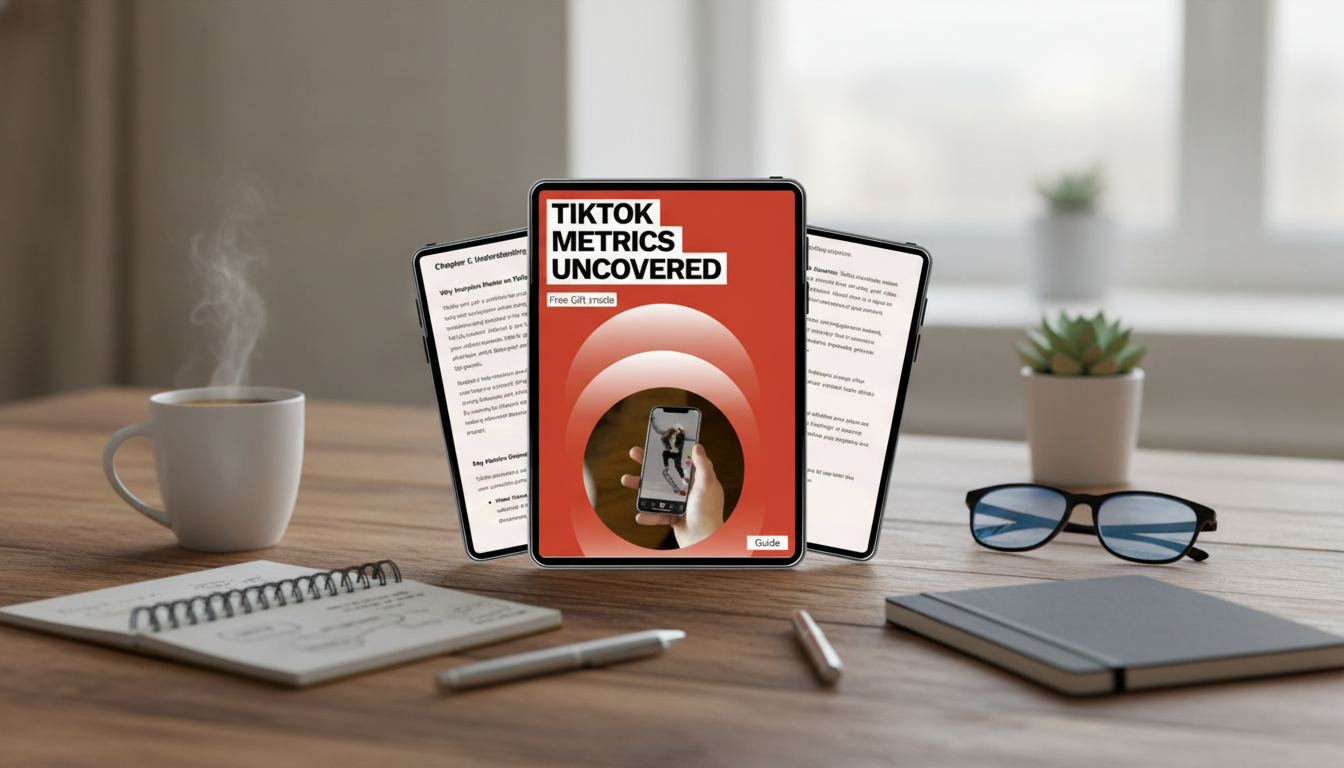
For creators who want a structured way to log these variables and turn them into decisions, TikTok Metrics Uncovered – A Practical Guide to TikTok Analytics, What to Track, and How to Grow Smarter is built around a repeatable review routine and simple tracking templates.
Core Performance Metrics and What They Actually Signal
Start with definitions that prevent common misreads. Views can include repeat watches, while reach (where available) is closer to unique exposure. Average watch time is often the strongest early indicator that your content holds attention beyond the first seconds. Completion rate matters most on short videos; on longer videos, the watch-time curve and average watch time can be more informative than pure completion.
Engagement rate should be interpreted by type. Likes are lightweight. Shares and saves typically signal higher value and can contribute to longer-lived distribution. Finally, traffic source (For You vs Following vs Search) tells you which optimization lever to pull: hook and pacing, episodic consistency, or keyword clarity.
Metric → What It Means → Common Fix When It’s Low
| Metric | What it signals | If it’s low, try this |
|---|---|---|
| Average watch time | Ability to hold attention after the first seconds | Tighten pacing, remove setup, add pattern breaks every 2–4 seconds |
| Completion rate | Story structure and payoff clarity | Shorten length, tease the payoff earlier, reduce side points |
| Shares | Content is identity-relevant or broadly useful | Add a stronger takeaway, make it more relatable, include a “send to a friend” moment |
| Saves | Content is actionable and worth revisiting | Add steps, checklists, templates; show final result and how to replicate |
| Comments | Prompted conversation or strong opinion gap | Ask a specific question, compare two options, invite stitches/duets |
| Profile visits | Interest in the creator beyond the single video | Clarify niche in bio, pin a “start here” video, align CTA with next step |
Retention Diagnostics: A Simple “Drop-Off” Checklist
If retention is weak, treat it like a troubleshooting checklist instead of a mystery. Start with hook clarity: the first 1–2 seconds should state the promise (what the viewer gets). Then add scroll-stoppers—movement, framing changes, or on-screen text that adds information rather than decoration.
Engagement That Predicts Growth: Prioritize Shares and Saves
Discovery and Search: Using Traffic Source to Shape Content
Hashtags and sounds help categorize, but clarity and retention still do the heavy lifting. For official definitions and the latest platform guidance, reference the TikTok Help Center: Analytics. For broader context on attention and creative best practices, Think with Google is a useful benchmark.
A Weekly Review Routine That Produces Better Creative Decisions
From Metrics to Action: Smart Growth Levers
Make conversions measurable by choosing one conversion action and tracking it consistently (profile click, link click, or a DM keyword). If you also sell services or digital products, clean pricing and clearer offers can raise conversion once traffic arrives; Rate Right | Freelance Pricing Checklist with ai for setting freelance rates, Confident Rates, Smart Pricing Strategy can help standardize how you present and justify pricing.
Tools and Templates for Tracking Without Overcomplicating It
If you want a structured workbook-style approach with definitions, benchmarks, and decision rules, TikTok Metrics Uncovered – A Practical Guide to TikTok Analytics, What to Track, and How to Grow Smarter keeps the system lightweight while still making patterns obvious.
FAQ
What TikTok metrics matter most for growth?
Prioritize average watch time and completion rate as distribution signals, then track shares and saves as value signals. Use profile visits and follows to confirm that the content is attracting the right audience for what you post next.
How often should TikTok analytics be reviewed?
Use a two-pass rhythm: a quick check around 24 hours to catch early retention and engagement patterns, then a 7-day review to confirm what held and to plan next week’s experiments.
Why do some videos get views but few followers?
This usually happens when the video’s promise doesn’t match what the creator’s profile or next posts are about. Clarify your niche in the bio and pinned videos, align the follow CTA to a series, and keep topics consistent so new viewers know what they’ll get by following.
















Leave a comment