Finish More Books: A Busy Person’s Reading System

Read On Purpose: A Practical Plan to Finish More Books When Life Is Busy
Finishing books consistently is less about willpower and more about creating a repeatable system. A few small changes—choosing the right book, lowering friction, and using simple motivation loops—can turn “I should read” into a habit that survives busy weeks, low energy days, and distractions.
Why books go unfinished (and how to remove the real blockers)
Most unfinished books aren’t a character flaw—they’re a design problem. When reading depends on perfect conditions, it disappears the moment life gets messy.
- Too much choice: Starting multiple books spreads attention thin. Pick one primary book and let everything else live on a “later” list.
- Hidden friction: If the book is out of reach, the app is buried, or you don’t know what page you’re on, skipping becomes the default. Make the next step obvious.
- All-or-nothing expectations: Hour-long sessions sound inspiring but collapse under real schedules. Build a habit that works in 5–15 minutes.
- Mismatch between book and current life: A “great” book can still be wrong for this season—especially during stress or heavy cognitive load (the body’s stress response can reduce attention and stamina; see the APA overview on stress and the body: https://www.apa.org/topics/stress/body).
- No closure cues: Without a plan for finishing, the middle feels endless. Add a simple finish line and a visible countdown.
Pick a book you can actually finish this month
The best reading plan fails if the book doesn’t fit your current bandwidth. Choose for momentum first; depth can come later.
- Start with fit, not prestige: Match the topic and style to your current energy and attention span.
- Prefer shorter wins: A 150–250 page book rebuilds confidence quickly and helps rewire the “I finish what I start” identity.
- Preview before committing: Read the table of contents and one random chapter. If the tone feels like work, it will become work.
- Decide the finish line: Pick a realistic deadline (14–21 days) and a simple daily page target.
- Create a one-sentence purpose: “After I finish, I want to ____.” (learn a skill, gain perspective, unwind, solve a problem).
Match the book to the season of life
| If life feels like… | Choose books that are… | Avoid books that are… |
|---|---|---|
| Overwhelming and stressful | Light, structured, chapter-based, reassuring | Dense, highly technical, slow-burn |
| Busy but predictable | Moderate length, practical, easy to resume | Multi-thread narratives with many characters |
| Mentally tired after work | Short chapters, clear headings, conversational tone | Long chapters, minimal signposting |
| Motivated and curious | Challenging, skill-building, deeper dives | Overly repetitive or shallow summaries |
Build a reading habit that survives a busy schedule
Reading becomes consistent when it’s attached to something you already do and made easy to start. If you liked the habit logic from Atomic Habits, the same principles apply here: make it obvious, make it easy, make it satisfying.
- Anchor reading to an existing routine: After coffee, after lunch, or right before turning off the light.
- Lower the startup cost: Keep the book where you’ll use it. Leave it open to the next page or mark the next section header.
- Use the minimum viable session: Two pages or five minutes—small enough to do even on hard days.
- Create a dedicated reading zone: One chair, one corner, or one app folder. Consistency beats “perfect vibes.”
- Stack the habit with a reward: Tea, a blanket, or a short playlist used only for reading—your brain learns the cue quickly.
- Batch decision-making: Decide tonight when you’ll read tomorrow, so the moment doesn’t require planning.
Motivation that lasts: simple loops that keep you coming back
Motivation fades; systems keep going. The goal is to create a loop where reading reinforces the kind of person you’re becoming.
Finish stronger: a practical plan for the messy middle
The middle is where good intentions go to die—especially when sleep is short and attention is fragmented. If you regularly nod off while reading, consider moving sessions earlier; sleep loss affects focus and performance (NIH overview: https://www.nhlbi.nih.gov/health/sleep-deprivation).
A guided option for busy readers who want a clear system
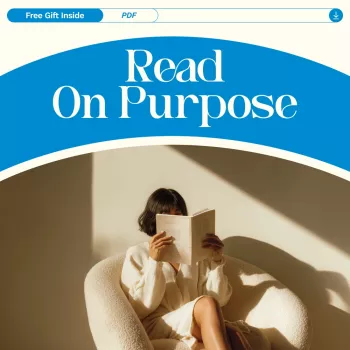
If you want structure without overthinking it, a step-by-step guide can remove trial-and-error and keep momentum consistent. Read On Purpose: How to Motivate Yourself to Actually Finish a Book (digital eBook) focuses on practical habit-building, motivation loops, and simple finishing strategies designed for packed schedules.
And if reading time competes with client work or side projects, a quick pricing-and-boundaries reset can indirectly protect more personal time. Rate Right: Freelance Pricing Checklist with AI can help reduce undercharging and frantic overbooking—two common reasons leisure reading disappears.
Common roadblocks and quick fixes
FAQ
How many minutes a day is enough to build a reading habit?
Five to fifteen minutes a day is enough to build consistency, especially when it’s anchored to an existing routine. Increase only after the habit feels automatic.
What should be done if a book is boring halfway through?
Recheck your purpose for reading it, then try a short trial (two chapters) with selective skimming or a different format. If it’s still misaligned, it’s okay to stop and choose a better-fit book.
Is it better to track pages, time, or chapters?
Pages give clear progress, time offers flexibility, and chapters provide natural stopping points. Pick one metric and track it with a simple checklist so momentum stays visible.














Leave a comment