Pet Brain Games: Enrichment & Smart Training Ideas
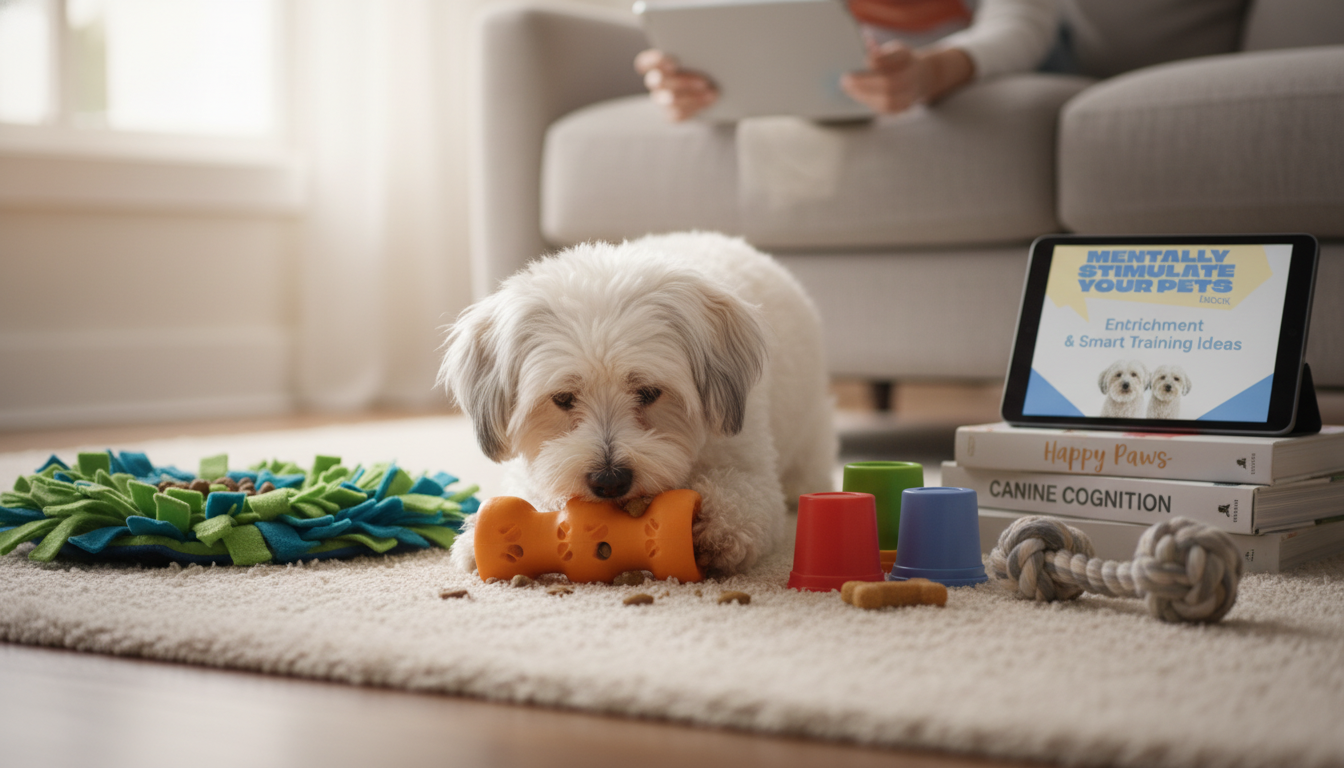
Creative Ways to Mentally Stimulate Your Pets: Brain Games, Enrichment, and Smart Training
Mental stimulation supports calmer behavior, healthier routines, and a stronger bond across dogs, cats, and other companion animals. A few minutes of the right brain work each day can reduce boredom behaviors (chewing, scratching, excessive vocalizing) and help pets feel more confident. The ideas below focus on practical, low-cost games and training activities that fit real schedules—plus a simple weekly plan to make it stick.
Why mental stimulation matters (and what boredom can look like)
Brain work complements physical exercise: a short puzzle session can tire pets in a different way than a long walk. For many animals, thinking and problem-solving are what “finishes the job” after basic movement needs are met.
- Common boredom signals: pacing, destructive chewing/scratching, attention-seeking, restlessness at night, or “getting into trouble” when left alone.
- Confidence benefits: structured challenges build problem-solving skills and can reduce frustration-based behaviors.
- Bonding effect: cooperative play and positive training create predictable, rewarding interactions.
For general pet-care guidance and welfare basics, reputable references include the American Veterinary Medical Association (AVMA) and the RSPCA.
Build the right challenge: simple rules that prevent frustration
Enrichment should feel like a solvable puzzle, not a dead-end. A few small tweaks keep sessions upbeat and prevent “quit moments.”
- Start easy, then increase difficulty gradually so success is frequent at the beginning.
- Keep sessions short: 3–10 minutes, 1–3 times daily, usually works better than occasional long sessions.
- Use high-value rewards when learning something new; switch to mixed rewards once a game is understood.
- Watch body language: if a pet disengages, vocalizes sharply, or starts pawing/biting frantically, simplify immediately.
- End on a win: stop after a successful repetition so your pet stays eager next time.
Food-based enrichment that doubles as a brain game
Mealtime is built-in enrichment. The goal is to stretch the same calories into more “work” and more satisfaction.
- Scatter feeding: toss kibble/treats across a safe area to encourage sniffing and searching.
- Snuffle alternatives: roll food into a towel, tuck it into paper egg-carton cups, or hide small portions in cardboard boxes.
- Frozen or layered treats (pet-safe): slow down fast eaters and extend engagement time.
- “Find it” routine: show a treat, place it behind a chair or under a cup, then cue the search.
- Upgrade the environment: rotate feeding locations to add novelty without adding calories.
Scent games for dogs (and scent-friendly versions for cats)
Scent work is naturally calming for many pets because it encourages focused, species-typical behavior. For dogs, sniffing can be as tiring as a brisk walk; for cats, it pairs well with climbing and short bursts of play.
Smart training activities that feel like play
Training doesn’t have to be formal to be effective. Short, game-like sessions teach skills while also building frustration tolerance and focus. If you’re working through fear, aggression, or intense anxiety, consult a qualified professional such as a veterinary behaviorist; the American College of Veterinary Behaviorists (ACVB) is a helpful starting point.
Enrichment ideas by pet type (quick wins)
A simple weekly mental-stimulation plan (mix, rotate, repeat)
| Day | Food/Foraging | Scent/Search | Training/Skills | Novelty/Environment |
|---|---|---|---|---|
| Mon | Scatter feed + towel roll | Easy “find it” in one room | Touch target (5 reps) | Rotate 1 toy station |
| Tue | Puzzle feeder or treat cups | Box search (3 boxes) | Settle on mat (1–2 minutes) | New route: safe furniture/vertical option |
| Wed | Frozen lick/slow feeder (pet-safe) | Short scent trail | Leave it + reward calm | Cardboard fort/temporary tunnel |
| Thu | Treats hidden in paper bedding | “Find it” in two rooms | Trick: spin or bow | Move a perch/scratch post slightly |
| Fri | Snuffle-style foraging | Object search (toy or cue word) | Recall-to-reward game | Short supervised new outdoors sniff spot |
| Sat | Meal split into mini hunts | Harder hide-and-seek | Shaping with a box/platform | Introduce a new safe texture (mat/blanket) |
| Sun | Light foraging (easy day) | Quick review search | Skill review (3 cues) | Rest day: calm enrichment (chew/shred) |
Safety and troubleshooting: keeping enrichment positive
A guided option: structured games and training you can follow
If you want a ready-to-use set of games with step-by-step progressions, a structured guide can simplify daily planning and help you keep variety without guessing what to do next. Consider starting with Creative Ways to Mentally Stimulate Your Pets (ebook guide) for clear difficulty levels and species-friendly options.
For “novelty days,” some households also benefit from refreshing the environment—such as creating a calm, defined hangout zone indoors (cords managed, surfaces easy to clean) or a supervised outdoor lounge area. If you’re updating spaces anyway, options like a Floating TV Stand with 36″ Electric Fireplace and High Gloss Finish or a 7-Piece All-Weather Wicker Patio Furniture Set with Cushions & Pillows can support more consistent “place” training and calmer routines around family activity.
FAQ
How much mental stimulation does a pet need each day?
Many pets do well with about 10–20 minutes a day split into short sessions. Adjust based on species, age, and energy level—consistent, easy-to-win games often help more than occasional long sessions.
What are easy mental stimulation activities to do at home without buying toys?
Try scatter feeding, a towel-roll “snuffle,” a simple box search, hide-and-seek treats, basic trick training (touch, spin, mat), a finger/spoon target, or rearranging safe obstacles for supervised exploring. Avoid anything with strings, small parts, or materials that can splinter or be swallowed.
Can mental stimulation help with destructive behavior or barking/meowing?
It can reduce boredom-driven chewing, scratching, and vocalizing when paired with adequate exercise and a predictable routine. If anxiety, fear, or separation distress is involved, enrichment helps but may not be enough on its own—professional support is often the fastest path to improvement.
















Leave a comment