1/1.3″ Sensor + 360° Stabilization: Real Action Upgrades
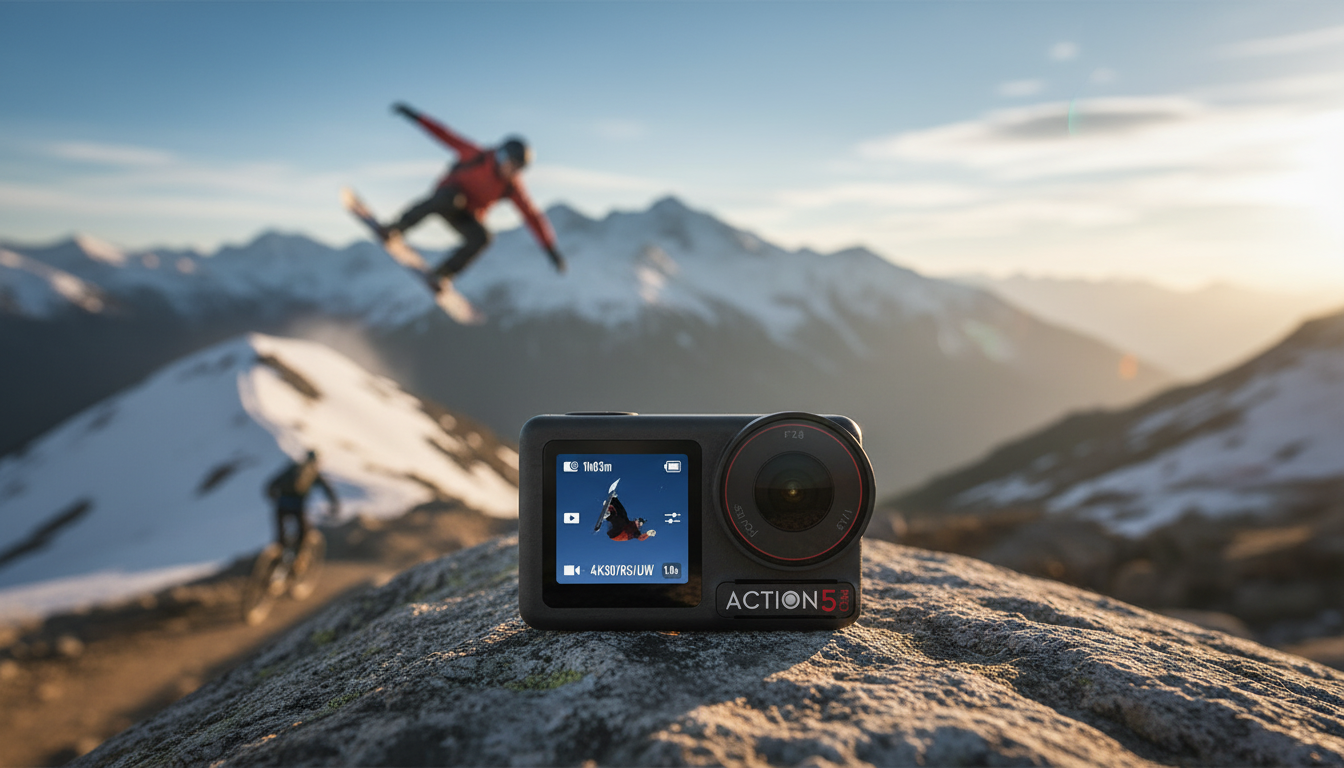
Action Camera Upgrades That Actually Show Up in Your Footage
Fast movement, harsh light shifts, dust, spray, and sudden impacts can ruin otherwise epic footage. A larger 1/1.3″ sensor helps maintain detail and cleaner shadows, while 360° stabilization is designed to keep horizon and motion smoother when trails, handlebars, helmets, and waves get unpredictable. The result isn’t just “less shaky video”—it’s footage that stays easier to watch, easier to edit, and more consistent from one environment to the next. For more guidance, see Olympus OM-D E-M1 Mirrorless Camera Long Term Review.
If the goal is dependable POV and travel-ready adventure clips, the combination of a bigger sensor and all-direction stabilization targets the most common problems: blown skies, muddy shadows, jitter from vibration, and nausea-inducing micro-bounce. (For quick background on how field of view affects perceived motion, see angle of view fundamentals.) For further reading, see The Best Action Cameras for Travel Vlogs | Airport to city center.
What a 1/1.3″ Sensor Changes Outdoors
A 1/1.3″ sensor is a meaningful step up for an action camera because it helps collect more light and handle contrasty scenes with fewer compromises. Outdoors, that translates to footage that holds together better when conditions turn “unfriendly” for small sensors.
- Cleaner low-light and mixed-light clips: Dawn rides, forest shade, and sunset descents tend to produce noisy shadows and smeared detail. A larger sensor can keep texture more intact with less crunchy noise reduction.
- More usable dynamic range: When bright skies and darker terrain share the same frame, a bigger sensor has an easier time retaining highlight detail while keeping shadows from collapsing. (More context: dynamic range in imaging.)
- Better texture retention during motion: Fine detail like rocks, snow, sand ripples, and foliage can turn into a “watercolor” look when processing gets aggressive. More sensor data helps footage stay sharper without overprocessing.
- Stronger pairing with higher frame rates: Higher FPS usually requires faster shutter speeds, which can push ISO up in shade. A larger sensor helps keep noise more controlled when you need that speed.
How 360° Stabilization Helps in Real-World Movement
Action camera stabilization has moved well beyond basic shake reduction. 360° stabilization (often paired with horizon leveling) aims to keep footage more “locked” even when the camera rotates during turns, drops, and body movement. (General background: image stabilization overview.)
- Less vibration fatigue: Gravel chatter, engine buzz, and board vibration create high-frequency jitter that can look like nervous footage. Strong stabilization reduces those tiny jolts that tire viewers out.
- Steadier framing when rotation gets messy: Helmet checks, wrist angle changes, pole swings, and hard carves can rotate the camera unexpectedly. 360° stabilization can keep the horizon more consistent and reduce “rolling” feel.
- More watchable POV: Even if a clip is “stable,” micro-shakes can cause eye strain over a 2–3 minute segment. Smoothing those micro-movements is a bigger upgrade than many people expect.
- Mount quality still matters: Stabilization works best with a firm mount. A loose mount can introduce wobble or oscillation that looks unnatural, even with the best in-camera processing.
Recommended Settings for Adventure Footage
The best settings depend on the light, the speed of motion, and how much flexibility you want in editing. These guidelines keep footage natural-looking while maximizing what the sensor and stabilization can do.
- Bright conditions: Don’t let shutter speed get too fast or motion can look “stuttery.” ND filters help keep motion blur natural when it’s sunny.
- Low light: Prioritize stable exposure and avoid pushing frame rate too high if noise becomes distracting. Sometimes a cleaner 30 fps clip looks better than a noisy 60 fps clip.
- Fast action: Use higher frame rates when you want the option to slow down jumps, spray, and quick passes.
- Audio: Reduce wind rumble by placing the camera behind a screen or inside a housing, and enable wind reduction when available.
- Color: If edits are planned, use a profile that leaves room for grading. For quick sharing, a natural profile can save time.
Quick setup guide by scenario
| Scenario | Frame rate | Stabilization | Extra tips |
|---|---|---|---|
| Mountain biking (rough trail) | High (for slow motion) | High / 360° mode | Use a firm mount; add ND on sunny days |
| Skiing / snowboarding | Medium–High | High / horizon support | Protect lens from snow; keep battery warm |
| Surf / water sports | Medium | High / 360° mode | Rinse after saltwater; check housing seals |
| Hiking at golden hour | Medium | Moderate | Lower ISO if possible; keep pans slow |
Mounting and Handling: Keeping Stabilization Working for You
Battery, Heat, and Weather: Planning for Longer Sessions
Action Camera with 1/1.3″ Sensor and 360° Stabilization: Highlights to Look For
For a ready-to-ride option, see Action Camera with 1/1.3″ Sensor and 360° Stabilization for Adventure Filming.
If footage is part of a content pipeline (sponsored edits, client deliverables, UGC packages), Rate Right | Freelance Pricing Checklist with ai for setting freelance rates, Confident Rates, Smart Pricing Strategy can help keep pricing consistent when deliverables expand beyond “just filming.”
FAQ
Does 360° stabilization replace a gimbal for action filming?
For most mounted and POV shooting, strong in-camera 360° stabilization can eliminate the need for a gimbal and keep setups lighter. A gimbal can still help for slower cinematic moves or when low light and heavy vibration create stabilization artifacts.
Is a 1/1.3″ sensor noticeably better for low light on an action camera?
It can be, especially for cleaner shadows and less noisy detail at dawn, dusk, or in tree cover. Results still depend on the lens, processing, and settings like shutter speed, frame rate, and ISO limits.
What mounts usually give the smoothest footage for biking or skiing?
Chest mounts are commonly the smoothest because the torso naturally dampens bumps better than a helmet. Helmet mounts deliver the most immersive POV, while handlebar mounts can show more vibration unless the mount is very solid or damped.















Leave a comment