14 Manager Moves to Motivate and Energize Your Team
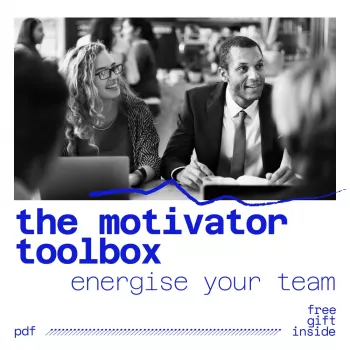
The Motivator’s Toolbox: 14 Simple Moves to Energize Your Team Today
Team motivation improves most when managers rely on small, repeatable actions rather than one-off speeches or flashy perks. The framework below turns everyday leadership moments—check-ins, feedback, recognition, and autonomy—into a practical checklist you can use today and repeat weekly. The goal isn’t to “pump people up.” It’s to make energized work the default by removing friction, clarifying priorities, and creating steady momentum.
What makes a team feel energized at work
Energized teams tend to share a few predictable conditions—no matter the industry or role:
- Clarity: People move faster when priorities and “what good looks like” are explicit.
- Progress: Visible wins and momentum reduce stress and increase persistence. Small wins matter more than grand gestures (see Harvard Business Review’s take on the power of small wins).
- Fairness: Consistent standards for recognition, workload, and accountability build trust.
- Autonomy with support: Freedom to choose the “how,” paired with fast access to help—aligned with principles behind Self-Determination Theory.
- Connection: Regular, human-level conversations prevent quiet disengagement and keep engagement from eroding (Gallup’s research on employee engagement and performance underscores the business impact).
The 14 simple moves (use as a manager’s checklist)
Use these as a “rotation,” not a rigid script. Pick 3–5 moves to emphasize each week based on workload, morale, and team maturity.
- Start meetings with a 60-second priority reset: top goal, top risk, top next step.
- Ask one high-signal question in 1:1s: “What’s blocking you that I can remove?”
- Name the impact, not just the effort, when recognizing work (who benefited and how).
- Make expectations visible: define “done,” quality bar, and timeline in writing.
- Create “decision lanes”: clarify what the employee decides vs. what needs approval.
- Use micro-deadlines: break work into checkpoints that create frequent progress wins.
- Offer choice between two paths: “Option A or B?” to increase ownership without chaos.
- Swap vague praise for specific behaviors: what to repeat, in what situations.
- Turn mistakes into learning loops: “What should we keep/change/stop next time?”
- Protect focus time: agree on one or two daily interruption-free blocks.
- Match tasks to strengths weekly: one “energy task” plus one “growth task” per person.
- Coach in the moment: short feedback within 24–48 hours beats delayed reviews.
- Celebrate small completions: ship, share, or demo something every week.
- Close the loop: when someone raises an issue, respond with a timeline and next action—even if the answer is “not now.”
Move-by-move guide: when to use it and what to say
| Move | Best moment to use | Quick prompt |
|---|---|---|
| Priority reset | Kickoffs, Mondays, standups | “If we only finish one thing, what must it be?” |
| Remove blockers | 1:1s, mid-project | “What’s slowing you down that I can fix?” |
| Impact recognition | After delivery, customer feedback | “Your work improved ___ for ___ by ___.” |
| Define done | Before work starts | “Show me what ‘done’ looks like in one sentence.” |
| Decision lanes | Delegation, new responsibilities | “You decide ___. I decide ___. Let’s write it down.” |
| Micro-deadlines | Large tasks, uncertain work | “What can we validate by Thursday?” |
| Offer choice | When assigning tasks | “Would you rather own A or B?” |
| Specific feedback | Any performance moment | “Do more of ___ when ___ because ___.” |
| Learning loop | After errors or missed goals | “What should we keep, change, stop?” |
| Focus time | High workload weeks | “Let’s protect two hours daily from pings.” |
| Strengths + growth | Weekly planning | “One energizing task, one stretch—what are they?” |
| Fast coaching | Within 48 hours | “Here’s what worked; here’s one tweak for next time.” |
| Weekly demo | End of week | “What can we show, even if it’s rough?” |
| Close the loop | After concerns or ideas | “By Friday, I’ll confirm next steps or a ‘not now’ decision.” |
How to run the checklist in 10 minutes a day
The fastest way to make this feel natural is to run it like a daily micro-routine—small, consistent touches that compound.
- Morning (3 minutes): Pick one move for the day (priority reset, blocker removal, or recognition).
- Midday (4 minutes): Send one clarity message—definition of done, next checkpoint, or a decision lane that prevents back-and-forth.
- Afternoon (3 minutes): Deliver one piece of specific feedback or close one open loop.
- Keep a running list: Track “wins,” “blockers,” and “next decisions” so you don’t rely on memory (or mood).
- Repeat weekly: Motivation grows from consistency more than intensity.
Common motivation mistakes (and quick fixes)
Printable tool: The Motivator’s Toolbox checklist
If you want a one-page version you can keep open during 1:1s and meetings, use The Motivator’s Toolbox checklist. It’s designed for quick reference so the moves become habits instead of “things you remember when you have time.”
For independent leads and freelancers managing client expectations (where clarity and decision lanes matter just as much), Rate Right | Freelance Pricing Checklist can support more confident, consistent pricing conversations—reducing the stress that quietly drains motivation.
When the team is remote, hybrid, or distributed
FAQ
What if an employee says they’re unmotivated but can’t explain why?
Run a quick diagnostic: confirm priorities, ask what’s blocking them, check workload and perceived fairness, and ask what would make this week feel like progress. Then pick 1–2 moves (like decision lanes, micro-deadlines, or protected focus time) and test them consistently for two weeks.
How often should recognition happen to feel real, not forced?
Aim for small, specific recognition weekly that clearly names impact, plus bigger recognition at meaningful milestones. Keeping it tied to behaviors and outcomes makes it feel authentic rather than performative.
How can a manager motivate employees without offering raises or promotions?
Increase autonomy, clarity, growth opportunities, and visible progress. Remove blockers quickly, define decision lanes, and make feedback and recognition frequent and specific so people can see how to win.















Leave a comment