AI Habit Coach: Break Bad Habits in a 14-Day Reset

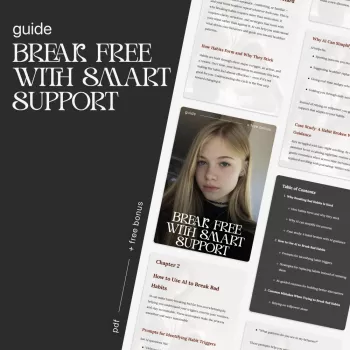
Break Free With Smart Support: AI Help for Breaking Bad Habits and Building Better Routines
Changing habits is easier when support is immediate, practical, and tailored to real life. AI can help spot patterns, reduce decision fatigue, and turn goals into small actions that fit the day-to-day. Used well, it becomes a steady companion: you bring honest inputs, and it helps you generate options, track what’s working, and recover quickly when a slip happens.
If you want a structured, ready-to-use system, start with Break Free With Smart Support | Guide on How to Get AI Help for Breaking Bad Habits and Building Better Routines and treat it like a 14-day experiment—small moves, consistent feedback, and gentle course correction.
What “smart support” looks like in daily habit change
Smart support isn’t hype or pep talks. It’s practical help that shows up exactly when your brain is most likely to default to the old pattern—tired, stressed, rushed, bored, or emotionally overloaded.
- Fast, low-friction help right when a craving or procrastination spike appears (a 60–90 second plan beats a 30-minute lecture).
- Personalized plans that adapt when sleep, stress, schedule, or motivation changes—because real life is not consistent.
- Small, repeatable steps that rely less on willpower and more on setup.
- Clear feedback loops to answer: what happened, why it happened, and what to try next time.
- A supportive tone that reduces shame and keeps momentum after slip-ups.
For a deeper understanding of how habits form and how they shift, credible overviews from the American Psychological Association (APA) and broader well-being guidance from the World Health Organization (WHO) are helpful references.
Pick one habit to change (and define the replacement)
Try changing one habit for the next 14 days. One clear target reduces mental overhead and makes results easier to interpret.
- Choose a single “target habit” to avoid spreading effort too thin.
- Describe it in observable terms (what, when, where) rather than labels like “be healthier.”
- Define a replacement routine that matches the same cue but swaps the action.
- Set two versions: a minimum (2 minutes) and a standard (10–20 minutes).
- Decide the success metric: check-ins completed, streak days, reduced frequency, or faster recovery after slips.
Target habit → replacement routine map
| Bad habit pattern | Common trigger | Replacement routine (minimum) | Replacement routine (standard) |
|---|---|---|---|
| Late-night scrolling | In bed, feeling wired or stressed | Put phone on charger across room + 3 slow breaths | 10-minute wind-down: dim lights, short journal, read 5 pages |
| Impulse snacking | Afternoon dip, boredom | Drink water + wait 5 minutes | Protein/fruit snack + 5-minute walk |
| Skipping workouts | Busy morning, low motivation | Put on workout shoes | 20-minute strength or walk session |
Set up AI as a coach: simple inputs that create better outputs
AI works best when you feed it a small, repeatable set of inputs—then ask for specific, constrained outputs. The goal is less “What should I do with my life?” and more “What’s my next 2-minute action at 3:15pm?”
- Provide a baseline: schedule, stressors, sleep window, and the habit’s usual time/place.
- List constraints: injuries, dietary needs, screen-time limits, work shifts, caregiving duties.
- Ask for options: “Give 3 replacement routines that take under 2 minutes to start.”
- Pick a coaching style: gentle encouragement, direct accountability, or data-driven feedback.
- Create a weekly review format: wins, slips, triggers, and one adjustment for next week.
If you also run a business or create content, keeping personal behavior changes and professional routines organized helps. A planning framework like Build a Smarter Content Calendar with AI can reduce background chaos, which often makes habit change feel harder than it needs to be.
How to use AI during the moments that usually derail progress
Derailment happens in predictable pockets: transitions, fatigue, stress spikes, and moments of “I just need a break.” Prepare scripts and micro-plans before those moments arrive.
Build routines that survive real life: cues, rewards, and time anchors
Tracking without burnout: light data that reveals patterns
AI support methods and when to use them
| Support method | Best for | Example outcome |
|---|---|---|
| Daily check-ins | Consistency and awareness | Fewer autopilot moments and faster course correction |
| If-then scripts | Predictable triggers | Clear actions when cravings or procrastination hit |
| Weekly reviews | Long-term improvement | Identifying root causes and adjusting the plan |
| Friction/reward design | Sticky habits | Making the unwanted behavior inconvenient and the new routine easy |
A 14-day reset plan (simple, repeatable, adjustable)
For a step-by-step template you can reuse each time you tackle a new behavior, keep Break Free With Smart Support as your “default system” and rerun it with a new target habit whenever life changes.
Using the guide as a ready-to-follow system
For additional everyday health guidance and practical behavior tips, the National Institutes of Health (NIH) News in Health is a reliable resource to complement your routine-building efforts.
FAQ
Can AI really help break bad habits, or is it just motivation?
AI is most useful for structure: identifying triggers, creating if-then plans, designing friction, and building lightweight tracking. Motivation tends to follow when routines are clear, repeatable, and supported by quick feedback.
What if a slip happens and the bad habit returns?
Use a restart protocol: do a non-judgmental review, name the trigger, shrink the routine to the minimum version, and resume within 24 hours. The goal is learning and faster recovery, not punishment.
How do routines stay consistent when schedules change?
Use anchors (existing cues), “bad day rules,” and two versions of the routine (minimum and standard). That flexibility keeps the behavior alive during busy weeks while still allowing growth when you have more energy and time.















Leave a comment