Commercial Automatic Orange Juicer for Fast, Consistent Service
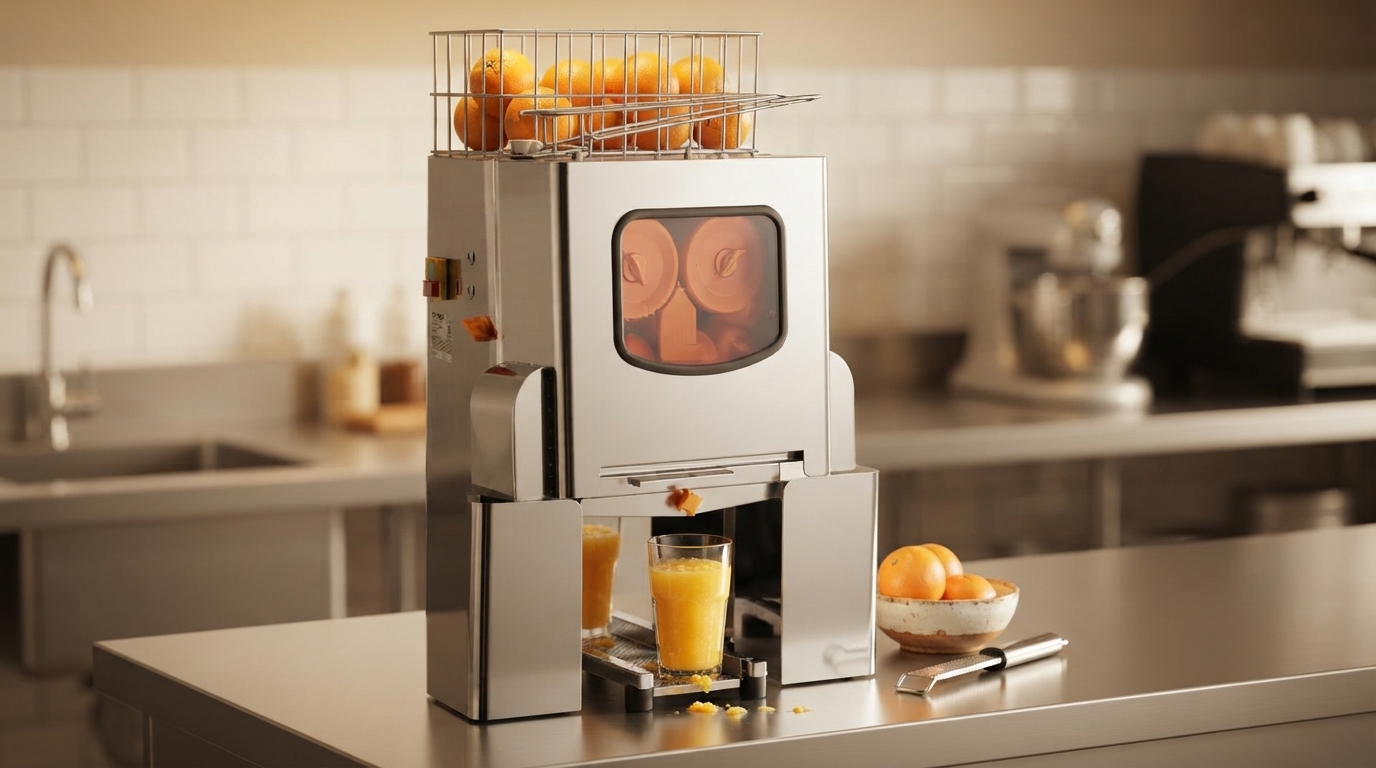
Commercial Automatic Orange Juicer Machine for Busy Juice Service
Fast-paced counters, cafés, and small restaurants need fresh juice output that stays consistent from the first glass to the last. A commercial automatic juicer machine streamlines cutting, pressing, and dispensing so staff can serve quickly, reduce mess, and keep flavor bright during rush periods.
What a Commercial Automatic Juicer Machine Does (and Doesn’t Do)
A commercial automatic juicer machine is built to turn whole citrus into pour-ready juice with fewer manual steps. For operations that sell juice by the cup, bottle, or pitcher, the big advantage is repeatability—less “one staff member is great at juicing and another is slow” variability.
- Automates the press cycle: fruit is fed in, cut, pressed, and the juice is routed to a cup or container with minimal handling.
- Helps maintain consistent yield per fruit by standardizing the press action and timing.
- Reduces prep time and cross-contact from manual squeezing and shared cutting boards.
- Doesn’t replace basic prep: fruit still needs sorting, rinsing, and occasional trimming depending on size and peel condition.
- Performance depends on fruit quality: overripe, very dry, or unusually sized oranges can lower yield and slow service.
It’s also worth planning for how you’ll hold and serve juice safely. If juice is pre-filled into bottles for grab-and-go, follow time-and-temperature controls aligned with local requirements and guidance like the U.S. FDA Food Code.
Where It Fits Best: Service Models and Daily Volume
The best placements and workflows depend on whether you’re juicing continuously, in short bursts, or in batches for later service.
- Juice bars and smoothie counters: steady output during peak windows without dedicating one staff member solely to juicing.
- Breakfast service in cafés and hotels: predictable morning surge with quick turnaround and less countertop mess.
- Convenience retail and deli counters: fresh-squeezed option that looks appealing and supports impulse purchases.
- Catering prep: batch filling of bottles or pitchers when paired with proper chilling and food-safe containers.
- Back-of-house vs front-of-house placement: balance customer visibility, noise tolerance, spill control, and ease of access for cleaning.
Front-counter placement adds “fresh squeeze” theater, but it also raises expectations for a clean station. Back-of-house placement can be quieter and easier to sanitize, especially if you’re filling multiple bottles at once.
Features to Prioritize Before Buying
Not all automatic orange juicers behave the same during a real rush. Prioritize the details that prevent slowdowns, sticky counters, and inconsistent pulp levels.
Quick checklist for evaluating machines side by side
| Evaluation point | Why it matters | What to verify before purchase |
|---|---|---|
| Throughput | Determines whether the machine keeps up with peak demand | Estimated fruits or cups per hour and whether output drops as pulp builds up |
| Cleaning time | Impacts labor cost and daily compliance | Tool-free disassembly, dishwasher-safe parts (if applicable), and reachable crevices |
| Juice quality | Affects taste, foam, and pulp level | Strainer design, juice channel smoothness, and how seeds/pith are handled |
| Durability | Reduces downtime and repair costs | Material thickness, motor protection, and availability of replacement parts |
| Safety | Prevents injuries and service interruptions | Guarding, stable base, and whether the machine runs only when properly assembled |
| Counter fit | Prevents bottlenecks and spills | Unit dimensions, loading height, cup clearance, and drip containment |
Daily Use Workflow: From Fruit Delivery to First Pour
For juice held for later service, build a habit of rapid chilling and clear labeling. For general handling reminders and refrigeration guidance, consult the USDA Food Safety and Inspection Service resources alongside local regulations.
Cleaning, Maintenance, and Downtime Prevention
Spotlight: Commercial Automatic Orange Juicer Machine
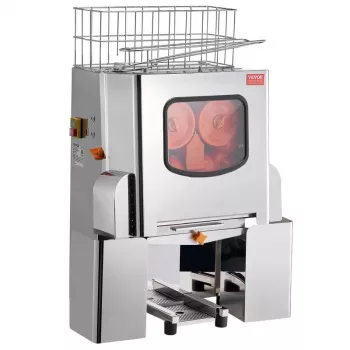
If the goal is quick pours with a consistent, fresh-squeezed profile, the Commercial Automatic Orange Juicer Machine is designed for commercial settings where speed and repeatability matter. It’s a practical choice for front-counter service, morning rushes, and steady daytime traffic—especially when paired with a tidy station layout and a simple cleaning routine.
At-a-glance purchase details
| Item | Details |
|---|---|
| Product | Commercial Automatic Orange Juicer Machine |
| Price | 735.49 USD |
| Availability | In stock |
| Product page | https://puriture.com/commercial-automatic-orange-juicer-machine/ |
More In-Stock Picks
- Rate Right | Freelance Pricing Checklist with ai for setting freelance rates, Confident Rates, Smart Pricing Strategy
- Floating TV Stand with 36″ Electric Fireplace and High Gloss Finish
- 7-Piece All-Weather Wicker Patio Furniture Set with Cushions & Pillows
FAQ
How many oranges can a commercial automatic juicer machine handle in an hour?
Hourly output varies by model, orange size, and how often you pause to clear pulp and rinse screens. A practical approach is to estimate peak cups per hour and choose a machine with extra buffer so performance doesn’t dip during the busiest window.
Is fresh-squeezed orange juice safe to hold for later service?
Yes—when it’s rapidly chilled, held under refrigeration, and stored in clean, labeled, food-safe containers with clear time limits. Avoid holding fresh juice at room temperature, and follow local food code requirements for time and temperature control.
What causes bitter taste in machine-pressed orange juice?
Bitterness can come from extracting peel/pith oils, using very small or overripe fruit, or running with dirty strainers and juice channels that carry old flavors. Rinsing fruit, choosing firm oranges in a consistent size range, and cleaning filters and juice paths during service help keep flavor bright.














Leave a comment