Dress Like You Belong Anywhere: Simple Outfit System
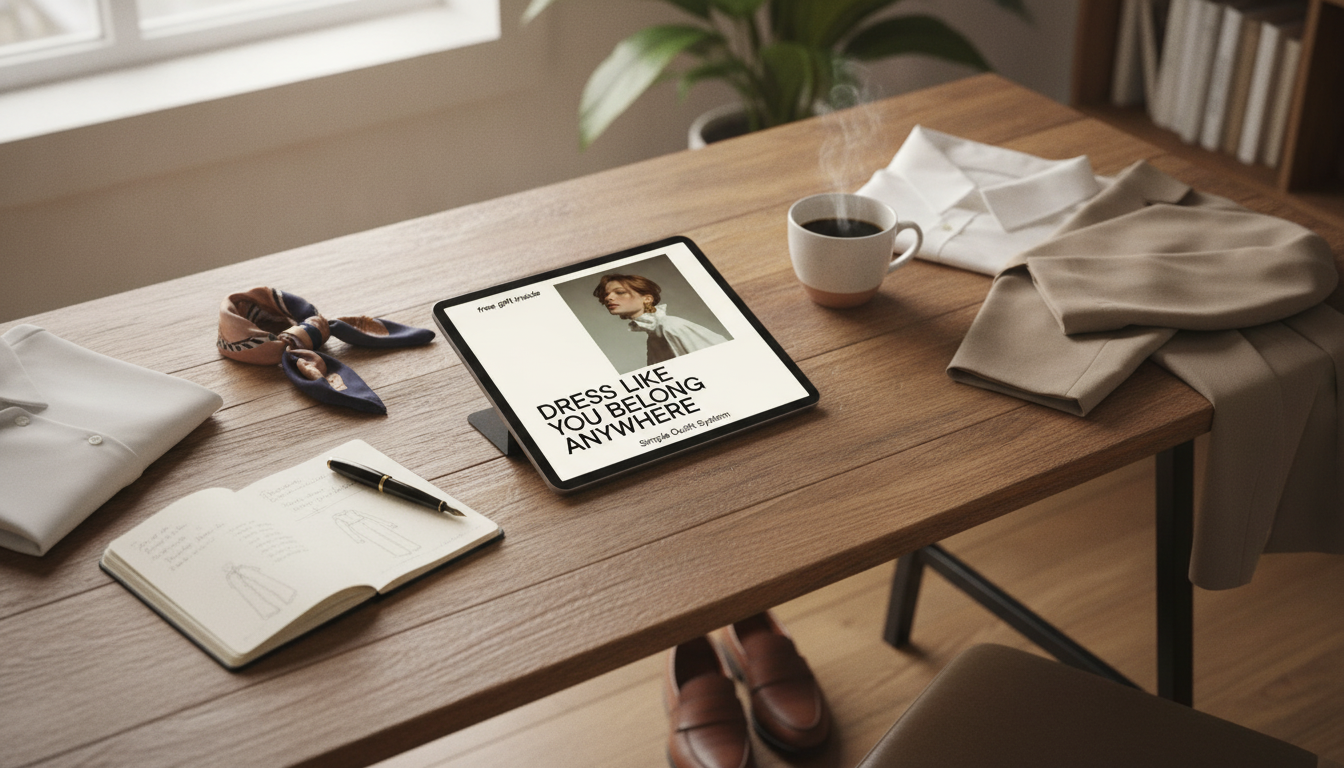
Dress Like You Belong Anywhere: A Confidence-First Outfit System for Everyday Life
Confidence in clothing rarely comes from chasing trends—it comes from knowing what supports your mood, your goals, and your body on a normal Tuesday. When getting dressed feels steady, you spend less time second-guessing and more time showing up. Below is an emotional-dressing approach plus a simple outfit system that lowers decision fatigue, helps you feel grounded in any room, and builds a personal style mindset you can repeat daily.
Why clothing changes how you show up
“Belonging anywhere” doesn’t look like being the best-dressed person in every room. It looks like calm posture, clearer decisions, and less self-monitoring—because your outfit isn’t taking up mental space. Clothing can act as a cue for identity and intention: when you dress in a way that matches the role you’re stepping into, your behavior often follows. Research on enclothed cognition suggests what you wear can influence how you feel and perform, not just how you appear (Northwestern University).
The hidden drain is outfit uncertainty: the spiral of trying on multiple looks, comparing yourself to imagined standards, and worrying about what other people might see. That stress compounds over time, especially when self-esteem is already being taxed by work, life transitions, or social pressure (American Psychological Association). A better target than “perfect style” is a set of reliable outfits that make you feel steady across settings—coffee runs, meetings, family gatherings, new spaces, and ordinary errands.
Emotional dressing: matching your outfit to the day you’re actually having
Emotional dressing is practical: it starts with the day you’re having, not the day you wish you were having. Begin by naming the feeling—low-energy, overstimulated, ambitious, social-but-anxious, tender, neutral. Then choose the job your outfit needs to do: comfort, authority, approachability, creativity, protection, or celebration.
Next, add an “emotional anchor”—a texture, color, silhouette, or accessory that reliably shifts your state. This isn’t about trends; it’s about repeatable cues. Smooth cotton can feel like a reset when you’re overstimulated. A defined waist or clean line can feel clarifying when you need authority. A signature color near your face can feel like a familiar “hello” when you’re nervous.
Avoid two common traps: (1) dressing for a fantasy day (buying or wearing outfits meant for a life you aren’t living this week), and (2) dressing as a punishment (choosing discomfort or hiding as “motivation”). The goal is support, not self-judgment.
Emotion-to-outfit prompts (quick decision guide)
| How the day feels | What to prioritize | Outfit formula to try | Small anchor detail |
|---|---|---|---|
| Low energy | Ease + polish | Soft base layer + structured outer layer | Sleek shoes or simple jewelry |
| Overstimulated | Comfort + simplicity | Monochrome set + minimal accessories | Smooth fabric (cotton/knit) |
| Need authority | Structure + clarity | Tailored top/blazer + straight-leg bottom | Defined waist or clean lines |
| Social/anxious | Approachability + safety | Familiar silhouette + one fun element | Signature color near the face |
| Creative | Play + movement | Statement piece + simple basics | Interesting texture or print |
The everyday outfit system: build repeatable formulas
Instead of trying to “fix” your style all at once, build repeatable formulas—simple uniforms you can reach for when time, energy, or confidence is limited. Start with three “default uniforms” that fit your real life: one for work (or focused tasks), one for errand days, and one for evening/social moments.
Use a three-part formula that works across aesthetics:
- Base (comfort): the layer that feels good on skin and moves with you.
- Structure (confidence): a piece that adds shape or clarity (blazer, crisp shirt, straight-leg denim, tailored cardigan).
- Finish (identity): one element that feels like you (a necklace you always love, a specific shoe profile, a signature lip color).
Personal style mindset: identity over approval
Finally, practice boundary styling: dressing for your comfort instead of imagined criticism. Success looks like easier mornings, more presence, and fewer regrets after leaving the house. When clothing supports your intention, it can reduce the mental noise that steals attention from your actual life (Harvard Business Review).
Build a confidence closet without starting over
If you want a structured, step-by-step way to put emotional dressing and outfit formulas into practice, the Dress Like You Belong Anywhere – Confidence Through Clothing Guide (Digital Download) is designed for quick reference during closet edits and morning planning.
When you need to look like you belong—fast
Digital guide to put it into practice
Systems are easier to repeat when they’re written down. The Dress Like You Belong Anywhere – Confidence Through Clothing Guide (Digital Download) walks through emotional dressing, outfit formulas, and closet edits in a way that works with any wardrobe size—from minimalist to maximalist.
For a different kind of confidence boost—especially if your wardrobe choices intersect with client calls, networking, or self-presentation—clear pricing can reduce a surprising amount of stress. The Rate Right | Freelance Pricing Checklist is a quick, practical tool for setting rates with more clarity.
FAQ
Is this more about mindset or about what to buy?
It’s primarily mindset and systems: naming the day, choosing an outfit function, and building repeatable formulas. Shopping is optional and only useful when it supports your emotional anchors and the outfits you already know you’ll wear.
How quickly can an outfit system start working?
Most people feel an immediate shift once they have 2–3 repeatable formulas they trust. Within a week of practicing, mornings typically feel faster and less emotionally noisy because the decision-making is already done.
What if personal style feels inconsistent from day to day?
Changing moods are normal; the goal is flexible consistency, not a single look. Your style values and one signature anchor (like a color family or jewelry metal) can keep you feeling coherent while still dressing for how you feel.










Leave a comment