Keep Cats Cool in Hot Weather: Safe Tips & Heat Signs
Welcome to Hot-Weather Cat Comfort
Hot weather can push cats past simple “panting after play” into dangerous overheating. Comfort starts with understanding how cats shed heat, setting up cooler zones at home, and recognizing early warning signs. The goal is simple: create easy, low-stress ways for your cat to cool off, drink more, and rest safely during heat waves—plus know what to do if heat illness is suspected.
How Cats Handle Heat (and Why Overheating Happens Fast)
Cats aren’t built to sweat like humans. They lose heat mostly through breathing and a small amount of sweating through paw pads, which means they can overheat faster than many people expect—especially in still, humid indoor air. Heavy panting is a red flag in cats, not a normal “cooling strategy.”
Humidity makes things trickier because it reduces evaporative cooling; a room can feel “not that hot” to a person while still being risky to a cat without airflow. Risk rises further for brachycephalic (flat-faced) breeds, seniors, kittens, overweight cats, and cats with heart or airway disease. Thick coats and dark coats can absorb and hold more heat, and indoor-only cats can still overheat in sunlit rooms that trap warmth like a greenhouse.
Set Up a Cooler Home: Zones, Airflow, and Sun Control
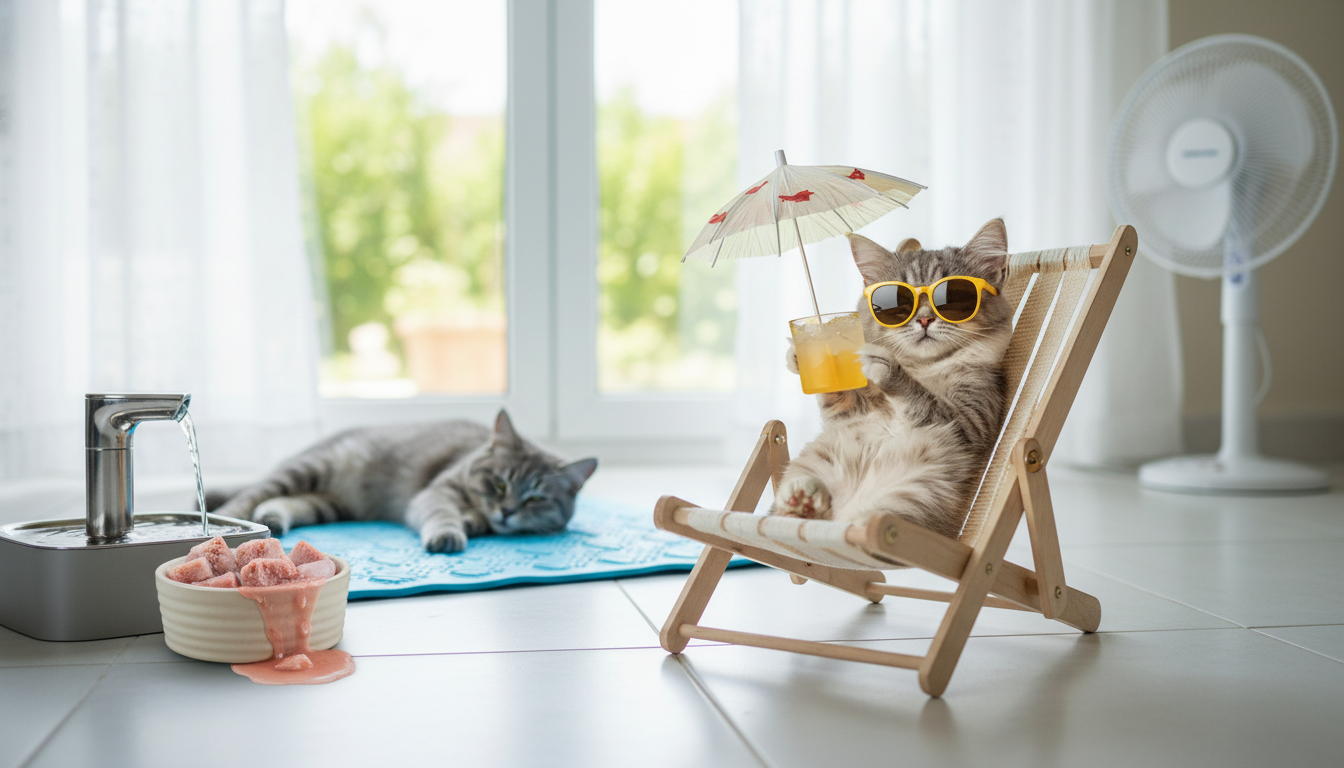
Start with at least one dedicated cool zone: shaded, quiet, and away from heat sources like dryers, ovens, or sun-baked windowsills. Cats self-regulate best when they can choose where to rest—so offering options is more effective than trying to “make” them use one spot.
- Airflow: Use a fan to move air across the room, but avoid strong airflow directly into your cat’s face. Aim it to circulate air between rooms or along a hallway.
- Sun control: Close blinds or curtains on sun-facing windows during peak heat. In the hottest rooms, reflective window film or blackout curtains can cut radiant heat noticeably.
- Cool surfaces: Provide tile, a cooling mat, or a lightly damp towel over a waterproof layer. The towel should be cool-to-touch, never dripping.
- Go low: Encourage floor-level lounging—heat rises, and lower spots often stay cooler.
| Home tweak | Why it helps | Simple tip |
|---|---|---|
| Shade sunlit windows | Reduces radiant heat | Close blinds from late morning through late afternoon |
| Create a “cool corner” | Gives a reliable retreat | Tile floor + water bowl + bed in a shaded spot |
| Increase airflow | Improves convective cooling | Fan near doorway to move air between rooms |
| Limit hot rooms | Prevents heat trapping | Keep laundry/bathrooms ventilated; close off attic-like spaces |
| Add cool surfaces | Helps heat transfer away from the body | Cooling mat or ceramic tile under a thin blanket |
Hydration That Works: Water, Food, and Litter Box Considerations
Hydration is one of the biggest heat-safety levers you can control at home. Many cats drink more when water is convenient, fresh, and placed thoughtfully.
- Multiple water stations: Put bowls in several rooms, especially where your cat naps. Many cats prefer water away from food and far from litter.
- Fresh and “whisker-friendly”: Refresh daily, and choose wide bowls that don’t press on whiskers—some cats avoid narrow dishes.
- Consider a fountain: Flowing water can increase interest in drinking, particularly for cats prone to urinary issues.
- Moisture through meals: Add wet food, or mix a small amount of water or pet-safe broth into food (avoid onion/garlic ingredients).
- Watch the litter box: During extreme heat, reduced urination can signal dehydration or illness and should be taken seriously.
Grooming and Coat Care for Hot Days
Regular grooming helps your cat’s coat work the way it’s supposed to. Brushing removes loose undercoat and improves airflow to the skin, which can make resting more comfortable—especially for long-haired cats.
Safe Cooling Tricks (and What to Avoid)
For more hot-weather safety guidance, see the American Veterinary Medical Association (AVMA) and the ASPCA hot weather safety tips.
Heat Stress and Heatstroke: Signs That Need Fast Action
For deeper feline health information, the Cornell Feline Health Center is a helpful reference.
Travel and Outdoor Time: Car Safety, Carriers, and Shade Rules
A Simple Daily Hot-Weather Routine
Extra Support for High-Risk Cats
Helpful Picks for a Cooler, Happier Cat
If you want a quick, printable reference for household cooling setups, hydration habits, and warning signs, Purr-fectly Cool Cats: A Complete Guide to Keeping Your Feline Cool & Comfortable in Hot Weather is a handy digital guide to keep on your phone during heat waves.
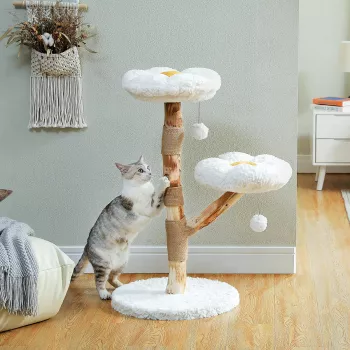
For cats that love climbing but tend to overheat on plush furniture, consider positioning a cat tree in the coolest room so they can choose between perches and floor-level cool zones. The Flower Cat Tree can be placed away from sunny windows to give your cat vertical space without encouraging naps in hot sun patches.
FAQ
Is it normal for a cat to pant in hot weather?
Panting can happen briefly after intense play or stress, but in heat it should be treated as a warning sign. Stop activity, move your cat to a cool area, offer water, and contact a veterinarian if panting persists or appears with drooling, lethargy, vomiting, or weakness.
Can cats use fans to cool down?
Fans can help by improving airflow, especially when paired with shade and cool surfaces. Position a fan to circulate room air rather than blasting directly into your cat’s face, and make sure your cat can move away if it prefers.
What’s the safest way to cool a cat quickly if overheating is suspected?
Move to a cool place, offer small sips of water, and cool gradually with cool (not icy) water on paws and belly plus airflow. Contact a veterinarian promptly, since heat illness can be serious even if symptoms temporarily improve.














Leave a comment