Practical Goal Visualization: A 7-Day Routine That Sticks
Why Goal Visualization Works When It’s Done Practically
Visualization turns vague wishes into clear mental targets and repeatable routines. When you pair vivid mental imagery with specific actions, it becomes easier to stay motivated, anticipate obstacles, and follow through day after day. The most useful version of visualization isn’t a dreamy highlight reel—it’s a short, repeatable rehearsal that nudges attention toward the right cues and makes the next step feel obvious.
To keep visualization grounded, think of it as a bridge between intention and execution: you picture what you’ll do, when you’ll do it, and how you’ll respond when real life gets in the way.
What Goal Visualization Is (and What It Isn’t)
Goal visualization is the deliberate practice of imagining a future outcome and the steps required to reach it, using detailed sensory and emotional cues. It’s most effective when the scene includes context (where you are, what time it is, what tools you’re using) and a clear “done for today” finish line.
It also has limits. Visualization works best when combined with planning, habit-building, and feedback loops; it is not a substitute for effort or a guarantee of results. A practical mindset is: visualize to prepare, rehearse, and commit—then measure and adjust.
Two modes are especially helpful:
- Outcome visualization: the destination (what “success” looks and feels like).
- Process visualization: the daily behaviors that make success predictable.
The Science-Informed Foundation: Imagery, Attention, and Rehearsal
Mental imagery can influence attention and performance by priming what the brain notices and reinforcing relevant cues in the environment. In plain terms: when you repeatedly rehearse a specific action sequence, you’re more likely to recognize the right moment to start—and less likely to drift into autopilot. For background on what mental imagery is, the American Psychological Association’s definition of mental imagery is a helpful reference.
Visualization becomes more effective when it includes process details (the “how”) and coping plans (what to do when it gets hard), not just the end result. Research on motor imagery and mental practice also points to performance benefits when rehearsal is specific and repeated; a starting point for exploring that body of work is this PubMed collection of studies.
For most people, short, frequent sessions (about 2–10 minutes) are easier to maintain than occasional long sessions. One more detail makes the habit “stickier”: do a concrete next action immediately afterward—send one email, do one set, open the budgeting app, or set a 10-minute timer. That immediate action turns imagery into evidence.
Set Goals That Are Easy to Visualize and Easy to Act On
The easiest goals to visualize are the ones you can translate into a scene you could film. Instead of “be healthier,” imagine: the time of day, the room or route, the tools you’ll touch, and what “done for today” looks like.
To protect consistency, use a minimum viable win: the smallest version of the task that still counts, even on low-energy days. Then attach a trigger that anchors the habit to real life: “When X happens, I will do Y for Z minutes.”
Finally, add one metric and one behavior: a measurable outcome (savings amount, reps, portfolio pieces) plus a controllable action (automatic transfer each payday, three outreach messages, 30 minutes of practice).
Goal translation: from abstract to actionable
| Goal statement | Daily/weekly action | Visualization scene details | Proof it’s working |
|---|---|---|---|
| “Get fit” | Walk 20 minutes after lunch (Mon–Fri) | Shoes by the door, sun on face, steady breathing, finishing loop | 5 walks/week logged |
| “Grow income” | Pitch 3 leads every Tuesday | Laptop open, outreach template ready, calm posture, clicking send | 3 pitches sent/week |
| “Reduce stress” | 10-minute evening reset routine | Dim lights, phone away, slow exhale, journal on nightstand | Sleep quality notes 4+ nights/week |
| “Learn a skill” | 30-minute practice session (Mon/Wed/Fri) | Timer running, specific exercise, noticing improvement, saving work | 3 sessions/week completed |
Powerful Techniques You Can Rotate (Pick 2 to Start)
Rotating techniques prevents visualization from becoming stale while keeping the habit simple. Start with two methods and use them for a week before adding more.
A 7-Day Visualization Routine That Builds Momentum
Common Pitfalls and Quick Fixes
Tools That Make Visualization Stick
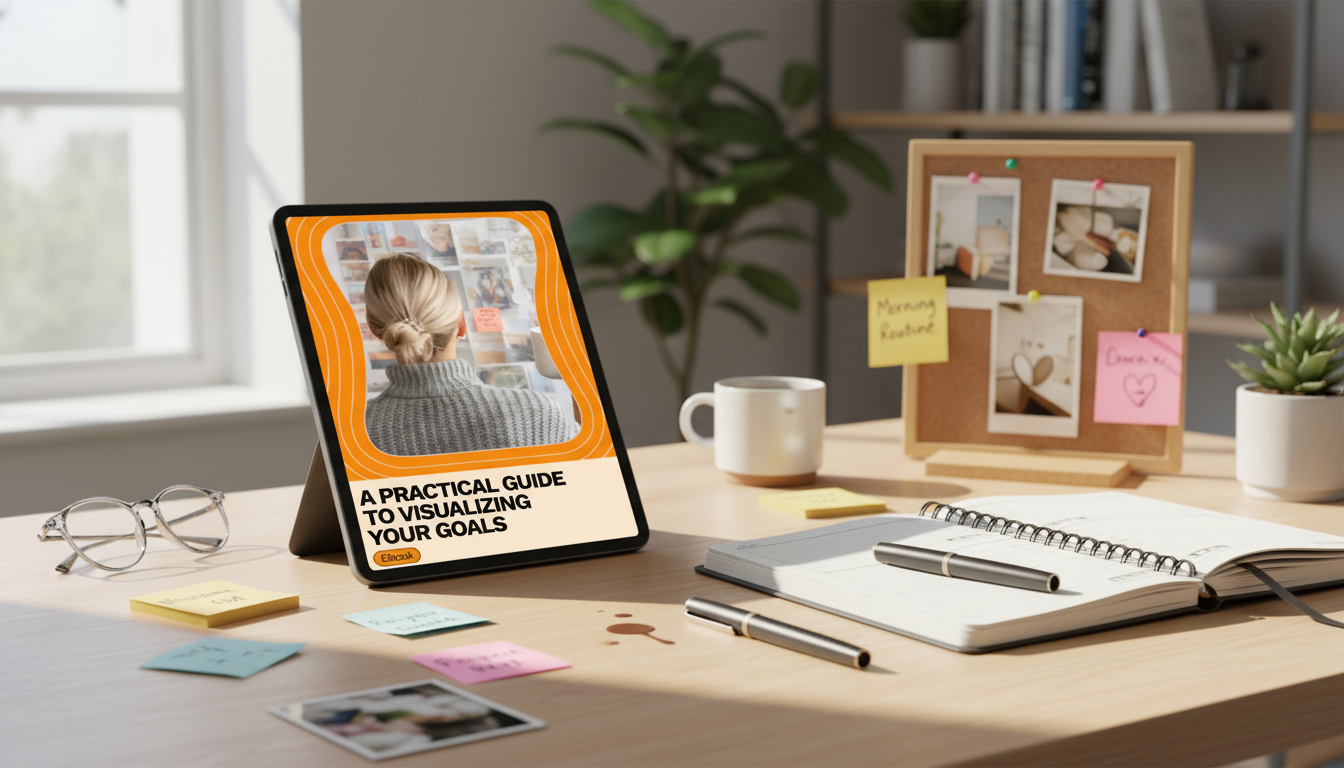
If you want a ready-made structure with prompts and examples, a dedicated guide can speed up clarity and reduce the mental load of “figuring out what to do next.” For a step-by-step format that supports daily follow-through, see A Practical Guide to Visualizing Your Goals: Unlock Your Full Potential with Powerful Visualization Techniques.
And if your goal depends on consistent publishing, marketing, or project execution, pairing visualization with a lightweight planning system can convert mental rehearsal into a realistic calendar. A helpful companion for scheduling and staying consistent is Build a Smarter Content Calendar with AI | AI-Powered Content Planning Guide. For creators building a monetized habit over time, How to Start a Money Blog – Ultimate Beginner’s eBook for New Bloggers can also fit well with a “visualize, schedule, execute” rhythm.
FAQ
How long should a visualization session be to be effective?
Two to ten minutes most days is enough for most goals, especially when it stays specific and repeatable. Consistency matters more than duration, and results improve when you take one immediate action right after the session.
Should visualization focus on the outcome or the process?
Use both, but prioritize process and coping rehearsal for follow-through. Outcome imagery is great for motivation and direction, while process imagery makes the next step easier to start and repeat.
What if visualization makes setbacks feel worse?
Switch to realistic scenes and add coping visualization so setbacks come with a recovery plan. Shrink the commitment, track leading indicators, and treat discomfort as a signal that the goal matters—and that you can respond skillfully when things get messy.
















Leave a comment