AI Vaccination Tracking: Cleaner Records, Smarter Reminders
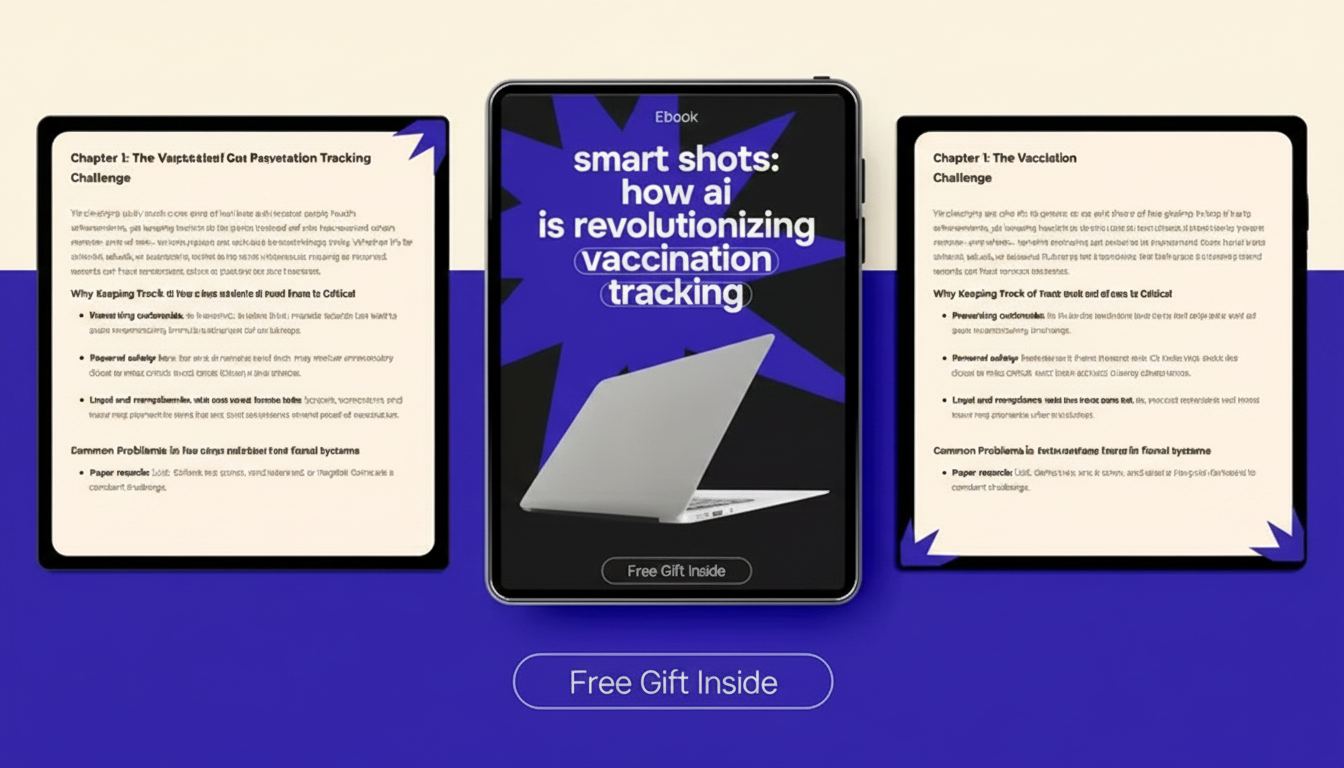
Smart Shots: How AI Is Changing Vaccination Tracking and Immunization Records
Vaccination programs run on three basics: accurate histories, timely reminders, and clear visibility into who is protected (and who is not). In everyday care, those basics can be hard to maintain—especially when immunizations happen in many settings and records don’t always line up. AI-enabled vaccination tracking is increasingly used to improve data quality, match patient identities across systems, flag patients who are due or overdue, and reduce administrative burden while strengthening population reporting.
For organizations that want practical implementation help, Smart Shots: How AI is Revolutionizing Vaccination Tracking – Digital Guide, eBook & Checklist provides a structured way to move from concepts to repeatable workflows, especially when multiple teams (clinical ops, IT, compliance, and public health reporting) must align.
Why vaccination tracking breaks down in real-world care
- Fragmented records: Immunizations recorded in EHRs, pharmacies, schools, and state registries can create blind spots in patient histories.
- Data quality problems: Duplicates, misspellings, outdated addresses, missing lot numbers, and inconsistent vaccine naming complicate reconciliation.
- Manual work competes with care: Staff time spent on chart review and outreach often loses to higher-acuity tasks, creating missed opportunities.
- Delayed reporting: Lagging updates reduce the ability to respond quickly to outbreaks and to target underserved communities.
- Equity challenges: People with unstable access to care are more likely to have incomplete records, which can trigger unnecessary repeat vaccination or missed doses.
Immunization Information Systems (IIS) can help coordinate vaccination data at scale, but they still depend on clean inputs and consistent sharing. For background on IIS and their role, see the CDC’s overview of Immunization Information Systems (IIS).
What AI adds to immunization records and registry workflows
- Record matching and deduplication: Probabilistic matching can unify patient identities across sources even when demographics differ slightly.
- Data normalization: Mapping vaccine names, CVX codes, schedules, and manufacturer/lot formats into consistent fields makes downstream logic reliable.
- Gap detection: Identifying patients due or overdue based on age, risk factors, and schedule rules helps avoid missed opportunities.
- Forecasting and prioritization: Flagging cohorts most likely to miss boosters supports smarter outreach and capacity planning.
- Natural-language extraction: When permitted, systems can pull vaccine details from scanned cards, faxes, or free-text notes to reduce manual entry.
- Workflow automation: Routing tasks to staff, generating outreach lists, and documenting actions with audit trails reduces friction and improves accountability.
Digital health approaches are expanding globally, including immunization-focused workflows and governance models. The World Health Organization’s digital health resources provide helpful context on broader digital transformation themes that also apply to immunization programs.
A practical view of an AI-enabled vaccination tracking pipeline
AI works best when it’s embedded into a clear pipeline with defined checkpoints—so teams know what gets automated, what requires review, and what must be logged for compliance and quality improvement.
Pipeline stages
- Ingest: EHR immunization tables, pharmacy feeds, state IIS, claims, and (where permitted) school forms.
- Validate: Schema checks for required fields such as date, vaccine type, dose number, manufacturer/lot, and administering site.
- Match: Identity resolution using deterministic and probabilistic rules, with careful handling for twins, name changes, and merged charts.
- Enrich: Add schedule rules, risk stratification signals, and geography for outreach planning.
- Act: Reminders, clinician prompts, standing-orders support, and patient communications aligned to consent and channel preferences.
- Monitor: Dashboards for coverage, timeliness, disparities, and model drift, plus routine quality reviews.
Typical AI tasks and operational outputs
| AI task | Example input | Output used by teams |
|---|---|---|
| Patient matching | EHR record + IIS record with slight name/date differences | Merged immunization history with confidence score and audit log |
| Schedule forecasting | Age, prior doses, vaccine type, recommended intervals | Next-due date and overdue status for each vaccine series |
| Data cleanup | Free-text vaccine entry and inconsistent coding | Standardized code set and corrected dose series placement |
| Outreach prioritization | Overdue list + past response patterns + clinic capacity | Ranked call/text list and suggested cadence |
| Coverage analytics | Aggregated vaccine histories by geography/demographics | Heatmaps and disparity indicators for targeted interventions |
Where AI tools help most in healthcare and public health management
For teams balancing multiple stakeholders and timelines, a planning resource like Build a Smarter Content Calendar with AI can also help structure recurring communications and campaign workflows—useful when immunization outreach involves seasonal pushes, booster updates, and multi-channel messaging.
Safeguards that matter: privacy, security, and governance
Privacy requirements vary by context, but HIPAA is a common foundation for many U.S. healthcare workflows. The HHS Office for Civil Rights HIPAA guidance is a useful reference when designing access controls, audit trails, and permitted uses.
Implementation checklist for teams adopting AI-supported immunization tracking
Digital guide and toolkit for turning concepts into workflows
For a ready-to-use framework, Smart Shots: How AI is Revolutionizing Vaccination Tracking – Digital Guide, eBook & Checklist is a practical option for clinics improving reconciliation, teams preparing AI-supported outreach, and public health programs strengthening coverage analytics.
FAQ
Can AI automatically update immunization records without human review?
Low-risk cleanup steps (like standardizing vaccine names or codes) can often be automated, but identity merges and schedule exceptions typically require confidence thresholds, human review for ambiguous cases, and audit logs to meet local governance expectations.
How does AI reduce duplicate patient records in vaccination registries?
AI uses probabilistic matching that weights signals like name, date of birth, address, and phone to detect likely duplicates despite typos or name changes. For uncertain matches, confidence scores help route records to staff for confirmation rather than merging automatically.
What should be checked before using AI-driven reminders for overdue vaccines?
Confirm consent and contact preferences, language accessibility, and that schedule logic reflects current recommendations. Also apply suppression rules for contraindications or completed series and monitor results to ensure reminders don’t disproportionately miss or over-target specific groups.















Leave a comment