Family Cleaning Routine Blueprint: Daily, Weekly, Monthly
What a Family Cleaning Routine Looks Like in Real Life
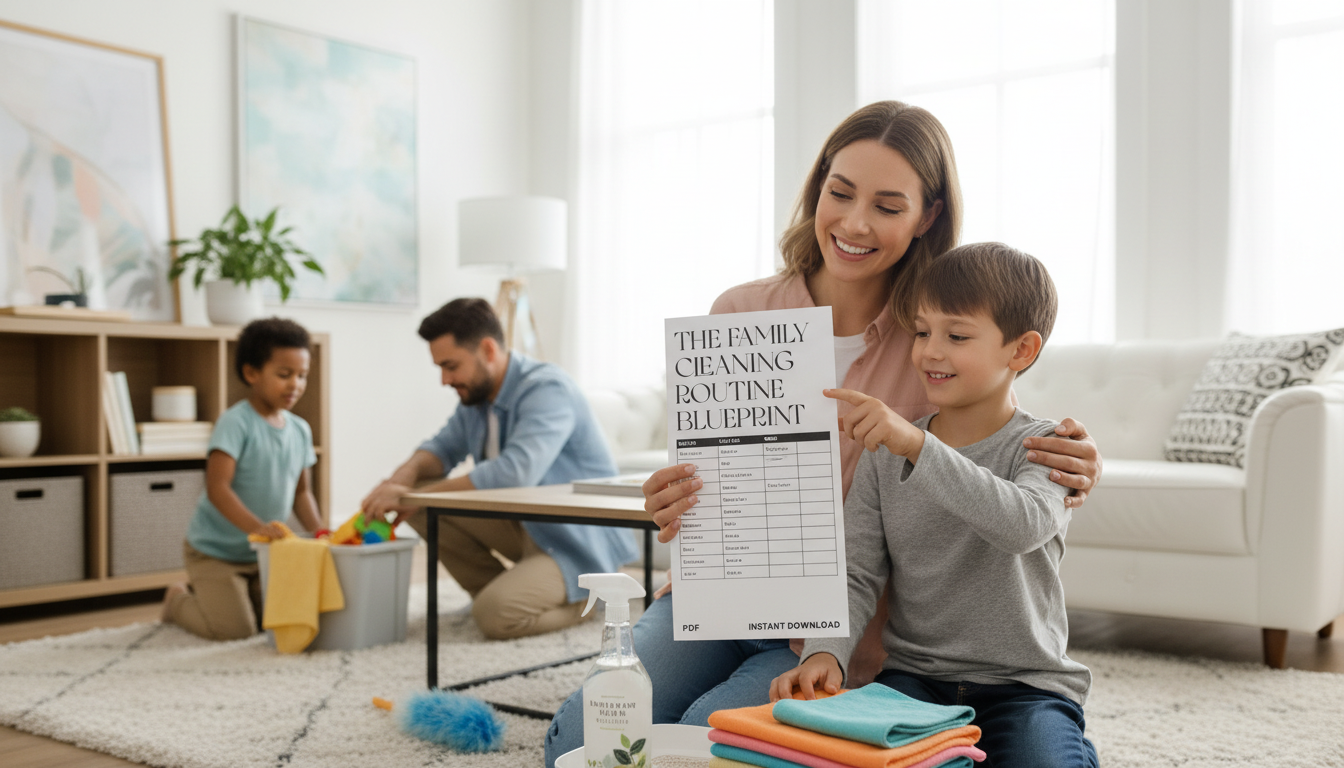
A family cleaning routine works best when it’s built around repeatable rhythms—not heroic, all-day cleaning marathons. Most homes run smoother with three layers: short daily resets that prevent pileups, a weekly deeper clean that covers the basics, and a monthly maintenance pass that keeps “invisible” chores from turning into weekend-eating projects.
The sweet spot is a routine that’s visible, simple, and triggered by moments that already happen (after breakfast, after dinner, before bed). That way, less energy goes into deciding what to do and more energy goes into just doing it. Aim for a “minimum viable clean”: focus on health, safety, and function—kitchen flow, bathrooms, floors, and laundry—then add extras only when time allows.
Finally, set a time cap so cleaning doesn’t expand to fill the day. Many families do well with 10–20 minutes for daily resets and 45–90 minutes for the weekly block. A timer turns cleaning into a quick sprint instead of a mood.
Step 1: Choose Your Zones and Non-Negotiables
Start by naming the zones that matter in your home. Common ones include the kitchen, bathrooms, bedrooms, living areas, entryway, and laundry space. These zones become your “map,” making it easier to spot what needs attention without scanning every corner of the house.
Next, choose 3–5 non-negotiables—the small actions that keep your home running even during busy weeks. Examples that work for many families:
- Dish control (load/unload dishwasher or wash the sink empty)
- Clear counters (kitchen and the main drop zone)
- Trash check (kitchen + any smelly/overflow spots)
- Quick floor sweep in high-traffic areas
- Laundry baseline (one step per day)
Match tasks to how the home is actually used. High-traffic spaces get daily attention; low-traffic rooms can rotate. Write tasks as actions, not ideals: “clear counters” is measurable; “clean kitchen” is vague and easy to avoid.
Step 2: Build the Routine by Frequency (Daily, Weekly, Monthly)
Once you know your zones and non-negotiables, assign tasks by frequency. Daily is for preventing buildup, weekly is for deeper cleaning, and monthly is for maintenance and “forgotten” areas. Anchor each frequency to a consistent moment: evenings for resets, one weekend block for weekly tasks, and the first weekend of the month (or the first Saturday you’re home) for monthly items.
Sample Routine Blueprint by Frequency
| Frequency | Time Target | Example Tasks | Best Trigger |
|---|---|---|---|
| Daily | 10–20 min | Dishes, clear counters, tidy living area, quick bathroom wipe, start/finish one laundry step | After dinner + before bed |
| Weekly | 45–90 min | Vacuum/mop, full bathroom clean, change sheets, dust surfaces, meal-plan pantry/fridge check | Weekend morning block |
| Monthly | 60–120 min | Wipe baseboards, clean vents, replace filters, declutter one category, wipe cabinets/doors | First weekend of month |
For guidance on when to clean versus disinfect (especially for high-touch areas), the CDC’s overview is a helpful reference: CDC: Cleaning and Disinfecting Your Facility.
Step 3: Share the Load (Age-Appropriate Tasks That Actually Get Done)
Sharing the load works when tasks are clear, teachable, and small enough to finish in one go. Instead of “clean your room,” try “put shoes in bin,” “put dirty clothes in hamper,” or “books back on shelf.” Kids (and adults) do better when success is obvious.
To reduce negotiating, give one task per person per reset. A simple pattern is: everyone does one 2–5 minute job during the nightly reset, then you’re done. Pair that with a short timer and a visible checklist so “finished” is objective.
Step 4: Set Up Your Tools and Home Systems
Focus on simple supplies: a multipurpose cleaner, glass cleaner, a disinfectant for high-touch areas, microfiber cloths, a vacuum, and a mop system you don’t hate using. For straightforward cleaning basics and practical tips, see the American Cleaning Institute: Cleaning Basics.
Printable Checklist Method: Make the Routine Visible
If a ready-to-use format helps your household get started faster, The Family Cleaning Routine Blueprint printable checklist is a digital option with daily, weekly, and monthly pages you can print and post or use on a tablet for quick check-offs.
When the Routine Breaks: Quick Reset Plans for Busy Weeks
If allergies or asthma are part of your home considerations, improving indoor air quality (like regularly changing HVAC filters and reducing dust buildup) can make a noticeable difference. The EPA’s guidance is a useful resource: EPA: Asthma Triggers and Indoor Air Quality.
Printable Blueprint Option
For families that also like planning routines beyond cleaning (meal planning, projects, school activities), a structured planning resource can pair well with a home checklist. Build a Smarter Content Calendar with AI is a digital guide designed for mapping recurring tasks and schedules—useful for anyone who prefers a clear system over last-minute scrambling.
FAQ
How long should a daily family cleaning routine take?
Plan for 10–20 minutes for a daily reset. A short timer and a small non-negotiable list make it easier to stay consistent, even on busy nights.
What are the best cleaning tasks to assign to kids?
The best tasks are simple and repeatable, like putting shoes in a bin, wiping the table, sorting laundry colors, or emptying small trash cans. Pair one task per kid with a timer and a checklist so “done” is clear.
How do you keep a cleaning routine from falling apart during busy weeks?
Use a rescue routine with 2–3 essentials (dishes, trash, quick clutter sweep), then protect one weekly catch-up block. Restart with the smallest daily loop before adding weekly tasks back.















Leave a comment