Work Outfit Formulas: Build a Capsule Wardrobe Fast
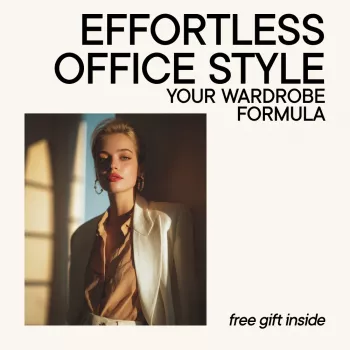
Effortless Office Style: A Wardrobe Formula for Consistent Work Outfits
A polished work look doesn’t require a huge closet—it requires repeatable outfit formulas and a small set of versatile pieces that mix easily. When your wardrobe is built around reliable combinations, getting dressed becomes a quick routine instead of a daily puzzle, while still reading professional for meetings, presentations, and everyday office hours.
Why office outfits feel hard (even with a full closet)
- Too many “single-use” items: pieces that only work with one bottom, one shoe, or one season end up creating dead ends.
- No default formulas: without a repeatable structure, every morning becomes a fresh styling decision.
- Gaps in basics: missing a neutral layer, comfortable work shoes, or a dependable top creates constant outfit friction.
- Inconsistent dress code signals: uncertainty about what reads as polished in your specific workplace culture can make “safe” choices feel unclear.
When mornings require dozens of micro-decisions, the mental load adds up. Research on stress and on decision-making highlights how cognitive strain can affect daily performance and well-being—another reason a simple wardrobe system can feel surprisingly restorative. (See the American Psychological Association on stress effects and the Harvard Business Review topic hub on decision-making.)
What a wardrobe formula does (and why it works)
- Turns styling into a system: pick a base, add a layer, finish with shoes and one intentional accessory.
- Creates consistency: outfits look cohesive because colors, silhouettes, and proportions repeat in a flattering way.
- Reduces decision fatigue: fewer choices, more certainty, faster mornings.
- Improves cost-per-wear: fewer items get worn more often because everything mixes.
Think of a formula like a “work outfit sentence.” Your base is the subject, your layer is the structure, your shoes are the punctuation, and your finishing touch is the detail that makes it feel intentional.
Build your capsule work wardrobe in 4 steps
Step 1 — Choose a neutral base
Pick 2–3 core colors that dominate bottoms and layers (black, navy, camel, gray are classics). When most of your foundation lives in a tight palette, you can grab pieces without wondering if they’ll fight each other.
Step 2 — Pick 1–2 accent colors
Use accents for tops, scarves, knitwear, or a statement shoe. Accents keep repeats from looking repetitive, especially when your office week has a similar rhythm.
Step 3 — Lock in your “uniform” silhouettes
Choose shapes that feel sharp and comfortable on your body and in your day: straight-leg trousers + tucked top; midi skirt + knit; sheath dress + blazer. The goal isn’t sameness—it’s reliability.
Step 4 — Set a weekly rotation
Map outfits around your calendar (meeting days, commute days, casual Fridays). When you’re not improvising, you’re more likely to look consistent—and actually enjoy your wardrobe.
The core pieces that multiply into dozens of outfits
| Category | Suggested count | Notes for maximum versatility |
|---|---|---|
| Tops | 4 | Mix 2 neutrals + 2 accents; include at least one that layers easily under a blazer. |
| Bottoms | 3 | Choose silhouettes that pair with every shoe you own and work with both tucked and untucked tops. |
| Layers | 2 | One structured (blazer) + one soft (cardigan or trench) to cover meetings and everyday. |
| Shoes | 2 | One walkable pair + one elevated pair; keep the color in your neutral base. |
| Accessories | 3 | Belt + earrings/watch + bag; rotate one statement item to refresh repeats. |
Work outfit formulas that always look put-together
| Base | Top | Layer | Shoe | One finishing touch |
|---|---|---|---|---|
| Tailored trouser | Silky blouse | Blazer | Loafer | Belt in matching neutral |
| Midi skirt | Fine-knit sweater | Trench | Ankle boot | Simple hoop or stud earrings |
| Dark denim (if allowed) | Crisp button-down | Blazer | Loafer | Structured tote |
| Sheath dress | — | Blazer | Low heel | Watch + minimal necklace |
| Straight-leg trouser | Polished tee | Long cardigan | Sleek flat | Scarf in accent color |
Adjust the same formulas for different office dress codes
Digital support for a wardrobe that runs on autopilot
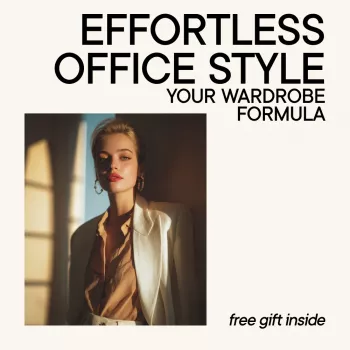
If you want a ready-made reference you can pull up before work (or while shopping), a digital guide can make the system stick. Effortless Office Style: Your Wardrobe Formula (digital download) is designed to help standardize your go-to combinations, spot missing basics, and keep your outfits consistent week after week.
For freelancers or anyone balancing client calls with office days, keeping your professional presentation consistent often goes hand-in-hand with running the business side smoothly. Rate Right | Freelance Pricing Checklist supports the “systems over guesswork” approach on the pricing side, so your week feels more organized overall.
A simple way to start this week
FAQ
How many pieces are needed for a capsule work wardrobe?
A practical range is about 12–20 core items, including tops, bottoms, layers, and two dependable pairs of shoes. Versatility matters more than the number—choose pieces that mix across multiple outfits and levels of formality.
Can outfit formulas still feel personal and not repetitive?
Yes—keep the silhouette consistent, then change the “personality” with accent colors, textures (knit vs. satin), and one swapped element like shoes or a statement accessory. Repeating a structure often looks more polished, not more boring.
Does a digital wardrobe guide work for different industries and dress codes?
It’s adaptable because the base formulas stay the same while you dial formality up or down with layers, fabrics, and shoe choices. A blazer and closed-toe shoe can shift the same outfit toward business professional, while softer layers and relaxed footwear can make it business casual or creative.












Leave a comment