How to Rebuild After Failure: Resilience + Comeback Plan
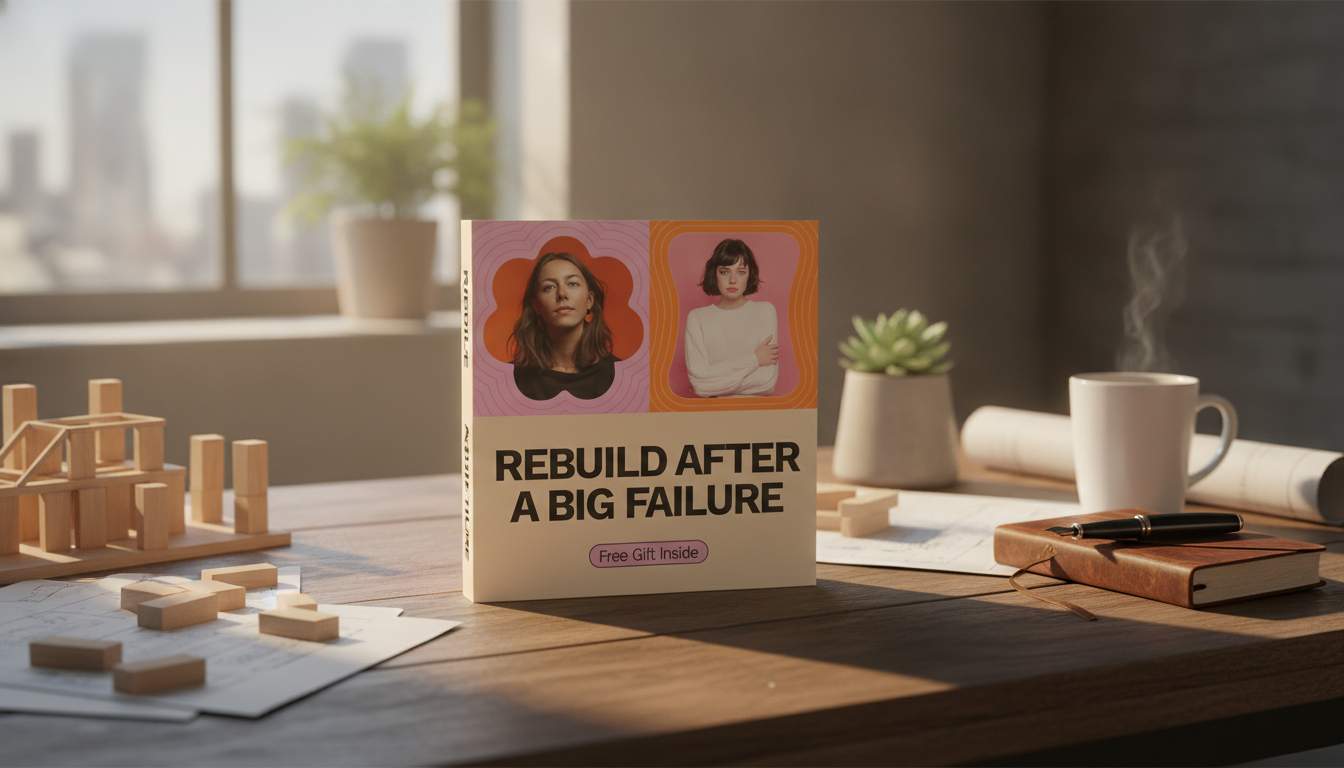
Rebuild After a Big Failure: A Practical Path to Resilience and a Strong Comeback
A major failure can shake confidence, routines, relationships, and identity. Recovery gets easier when the next steps are clear: stabilize first, process what happened without self-attack, learn the right lessons, and rebuild momentum through small, repeatable actions. The goal isn’t to erase the past—it’s to create a stronger, calmer foundation that can hold the next chapter.
Start with stabilization: safety, support, and basic structure
Right after a big setback, the nervous system often runs the show. Before making life-altering decisions, reduce the stress load with basics: sleep, food, hydration, movement, and time outdoors. If you can, avoid major changes for 48–72 hours—no impulsive resignation emails, angry posts, panic purchases, or dramatic “I’m done” messages.
Next, name immediate risk areas so they don’t swirl into one overwhelming cloud: finances, housing, job, reputation, relationships, legal exposure, and health. Then build a simple “support loop”: one person for emotional support, one for practical planning, and one for accountability. If the failure triggers persistent panic, depression, substance relapse, or thoughts of self-harm, get professional help promptly; stress responses can be treatable, and support is a strength, not a defeat. For evidence-based guidance, see the American Psychological Association’s overview of resilience and the National Institute of Mental Health tips on caring for your mental health.
72-hour reset checklist (quick stabilization plan)
| Time window | Focus | Actions |
|---|---|---|
| 0–24 hours | Calm the nervous system | Sleep, eat something simple, take a walk, reduce news/social media, write a one-page brain dump |
| 24–48 hours | Contain the damage | List urgent obligations, identify what must be communicated, pause nonessential commitments |
| 48–72 hours | Create a first plan | Pick one next step per category (health, money, work, relationships), schedule 2 small wins |
Separate what happened from what it means about you
Failure has two layers: the facts (what happened) and the interpretation (what it “proves” about you). The second layer is where shame grows. Practice separating them. Replace global labels like “I’m a failure” with specific language: “This project failed due to X and Y constraints,” or “I made an avoidable mistake in this step.” Specific language keeps your identity intact while still allowing accountability.
Also make room for reality: chance, timing, market conditions, and incomplete information shape outcomes. Acknowledging those factors isn’t dodging responsibility—it’s building an accurate model of what happened so the next plan is smarter. Watch for thinking traps that intensify pain without adding clarity: all-or-nothing thinking, mind reading, catastrophizing, and overgeneralizing. For the rebuild phase, choose a working identity statement you can act from: “I’m someone who can recover and learn fast.”
Run a no-blame debrief: learn without self-punishment
A good debrief is honest, calm, and useful. Start by reconstructing the timeline: key decisions, assumptions, missing data, and turning points. Then use five practical questions to extract insight without spiraling:
- What was the goal?
- What actually happened?
- What contributed?
- What was controllable?
- What changes next time?
Limit lessons to 3–5. Too many “takeaways” becomes noise and often feeds shame. Capture early warning signs you missed (metrics, behaviors, gut-level signals, or feedback you ignored) so future you can catch problems sooner. Close with one behavior change (what you personally do differently) and one system change (a process, checklist, boundary, or habit that makes the better choice easier).
Rebuild resilience with repeatable micro-habits
Confidence usually returns after consistent action—not before. Use “minimum viable days”: a tiny routine that protects stability even when motivation is low. For example: a 10-minute walk, one healthy meal, and 15 minutes on one priority task. This prevents the all-or-nothing cycle where one bad day becomes a lost week.
Then practice exposure to the feared arena in small doses: one call, one application, one pitch, one honest conversation. Add a “fail-forward” metric that tracks attempts, not only outcomes—submissions, reps, outreach, drafts completed. This retrains your brain to associate progress with controllable actions.
To strengthen emotional regulation, lean on skills that work under pressure: breathing practices, journaling, mindfulness, therapy-based cognitive restructuring, or coaching. Most importantly, rebuild self-trust by keeping small promises consistently. Scale up after 14 days of follow-through; consistency is the comeback engine.
Design a comeback plan: goals, constraints, and momentum
Handle reputation, relationships, and communication with clarity
When guidance helps: a structured recovery companion
If you want a guided plan you can follow day by day, consider Rebuild After a Big Failure – A Practical Guide on How to Recover from a Major Failure, Build Resilience & Create a Strong Comeback. For freelancers rebuilding after a tough client loss, pricing misstep, or income dip, Rate Right | Freelance Pricing Checklist with ai for setting freelance rates, Confident Rates, Smart Pricing Strategy can help you reset your numbers with less second-guessing.
FAQ
How long does it take to recover from a major failure?
Emotional shock often eases over a few weeks, while rebuilding confidence, stability, and results can take months. Timelines vary with finances, health, and the size of the loss, but steady routines, support, and small measurable wins reliably speed recovery.
What if the failure was public and feels humiliating?
Use a short script that states what happened, what you’re doing to fix it, and what you need next, then keep most processing private. Focus on repair actions and professional conduct; credibility returns through consistent follow-through, not perfect explanations.
How can motivation come back when confidence is gone?
Motivation often follows action: start with micro-habits, “minimum viable days,” and tracking attempts instead of outcomes. Rebuild self-trust by keeping small promises daily, and seek therapy or coaching if you feel stuck, depressed, or unable to function.
















Leave a comment