All-in-One Cat Tree: Litter Enclosure, Feeding & Storage
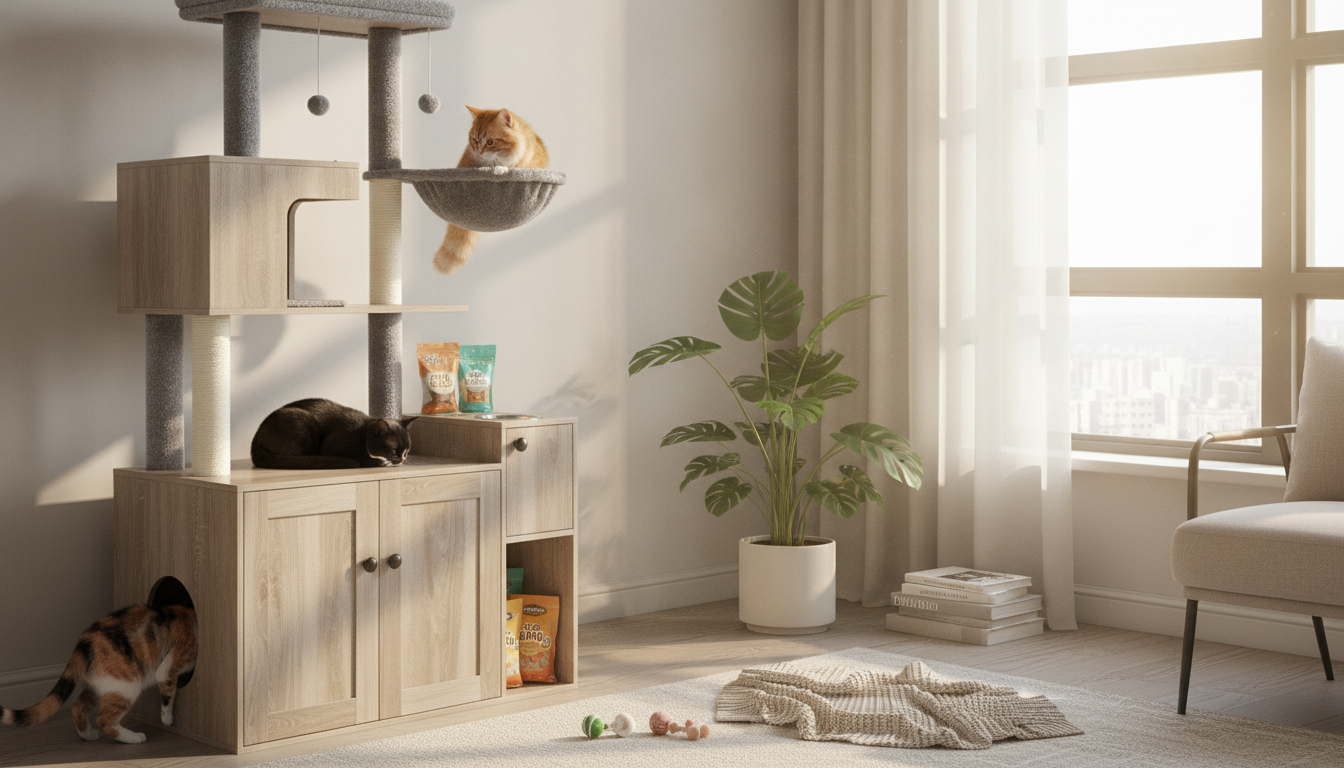
A Cleaner, Smarter Cat Corner Starts with One Organized Station
A single cat station that combines climbing, hiding, feeding, and storage can simplify daily routines while keeping a home tidier. A multi-functional cat tree with a litter enclosure, food station, and storage helps reduce odor triggers, keep stray litter and kibble contained, and give cats the vertical territory many naturally seek—without spreading supplies across multiple rooms.
What this cat station helps solve
- Reduces visual clutter by grouping litter, food, and cat furniture into one footprint.
- Helps contain scattered litter with an enclosed bathroom area and fewer “litter trails” into living spaces.
- Creates vertical territory (perches/scratch zones) that can lower boredom and redirect scratching from furniture.
- Adds storage for litter supplies, scoop, liners, deodorizer, and grooming tools so essentials stay close.
- Supports a more consistent routine by keeping feeding and bathroom zones predictable.
When litter box habits change, cleanliness and setup are often part of the picture; the ASPCA’s litter box guidance highlights how environmental details can influence bathroom compliance.
Key zones and why they matter
Litter enclosure
Privacy is a big deal for many cats. An enclosed space can feel more secure and can reduce tracking when paired with a litter mat and an entry that doesn’t face the busiest walkway.
Food station
A designated feeding surface keeps bowls from drifting, helps contain splashes, and makes daily wipe-downs fast—especially helpful if the station sits on carpeted areas nearby.
Cat tree structure
Vertical perches give cats a “lookout” zone that supports confidence and relaxation. Many cats prefer elevated resting spots, and providing them can reduce pressure on sofas, counters, and other off-limits areas.
Scratch-friendly surfaces
Scratching is normal maintenance and stretching behavior. Built-in scratch areas can channel claws away from furniture while supporting healthy movement.
Storage compartments
When scoop bags, deodorizer, wipes, and spare liners are within arm’s reach, daily maintenance becomes far more likely to happen on time. Convenience is cleanliness.
At-a-glance: Daily use and maintenance checklist
- Scoop litter at least once daily; twice daily is ideal for multi-cat households.
- Wipe the food station area regularly to prevent residue buildup and pests.
- Shake out or vacuum around the base to remove stray litter and kibble.
- Check fasteners and stability monthly, especially if cats leap onto upper platforms.
- Rotate toys and refresh scratch areas to keep the station engaging.
Routine guide for a litter enclosure + feeding station combo
| Task | How often | What to do | Why it helps |
|---|---|---|---|
| Scoop litter | Daily | Remove clumps/solids; top off as needed | Improves odor control and bathroom compliance |
| Replace litter | Every 2–4 weeks (varies by litter) | Empty, wash, dry, refill | Reduces lingering smells and bacteria buildup |
| Wipe bowls/feeding surface | Daily | Wash bowls; wipe station with pet-safe cleaner | Prevents odors, ants, and residue |
| Vacuum around entry | 2–3x/week | Vacuum base, mat, and nearby floor | Cuts tracking and keeps the corner tidy |
| Inspect stability | Monthly | Tighten screws; check wobble | Prevents tipping and improves confidence for jumpy cats |
Placement tips for a calmer cat corner
- Choose a low-traffic, quiet area for the litter enclosure while keeping it easy to access.
- Avoid placing the litter enclosure right next to loud appliances that may startle cats.
- Maintain separation between food and litter areas within the unit as much as design allows; keep bowls on the designated station and keep the litter section closed/contained.
- Ensure adequate ventilation near the litter enclosure to reduce humidity and odor buildup.
- Use a litter mat at the entrance and orient the entry away from main walkways to reduce tracking.
For broader ideas on building low-stress spaces, the American Association of Feline Practitioners (AAFP) Cat Friendly Homes resources are a useful reference point.
Helping cats transition to an enclosed litter space
If behavior concerns pop up—like sudden avoidance—checking for stressors and comfort factors is often as important as cleaning. The Cornell Feline Health Center offers helpful background on common feline behavior and wellbeing topics.
Odor control and cleanliness strategies that work with an enclosure
Safety and stability checks before letting cats climb
Who this setup suits best
Product option
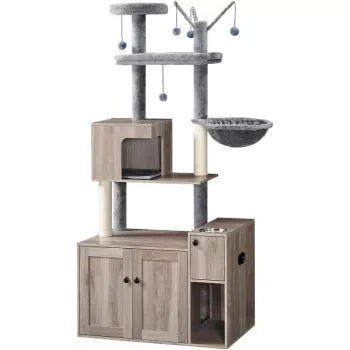
If the goal is a single, integrated station that combines litter privacy, feeding organization, and storage, consider the Multi-Functional Cat Tree with Litter Enclosure, Food Station & Storage. It’s designed to consolidate daily cat care into one corner while supporting climbing, scratching, and cleaner routines.
For a more streamlined living room layout around a dedicated cat corner, a wall-mounted media setup can help free up floor space near the station; the Floating TV Stand with 36″ Electric Fireplace and High Gloss Finish is one option if you’re reworking the same area. If your cat zone extends outdoors to a screened patio or covered deck, a comfortable seating area like the 7-Piece All-Weather Wicker Patio Furniture Set with Cushions & Pillows can help keep people and pets sharing the space without crowding the indoor cat station.
FAQ
Will cats use a litter box inside an enclosure?
Most cats adapt well when the change is gradual and the enclosure feels safe. Keep the entry unobstructed at first, avoid strong scents, and make sure the interior is large enough for comfortable turning and digging.
Is it okay for the food station to be near the litter enclosure?
It can work when the feeding area is clearly separated and kept clean, but some cats prefer more distance. Keep bowls on the designated feeding surface, keep the litter section contained, and monitor for any changes in appetite or litter habits.
How often should the litter enclosure be cleaned?
Scoop daily (twice daily for multi-cat homes when possible). Plan on a full litter change and a wash-down every 2–4 weeks depending on litter type, number of cats, and odor levels.













Leave a comment